The Drop Bar Blog
Welcome to the Drop Bar Diaries
Rides and reflections from the middle gear of life: cycling, work, music, and staying curious in your fifties. And Zwifting in pretty chocker block garage after moving house. Again.

The Edit Cave, A Mossy Bottom, and the Climb at the End of a Year
Twelve months ago, give or take a week, I started an experiment. I would use an AI as a cycling coach. Not an occasional calculator, not a training schedule generator I would ignore by week three, but a daily collaborator. Every ride uploaded, every weigh-in logged, every honest conversation about tiredness, discipline or over-indulgence. Twelve months of pedalling, of pattern recognition across hundreds of data files, of nudging and correcting and the slow accumulation of an aerobic base that at fifty-five I had had almost consigned to ancient history.
I am, as I type these words, mere days away from the specific climb that started it all. Sa Batalla, in Mallorca. The road where I bonked spectacularly in the autumn of 2025 and understood, at the top, that something had to change. Well, actually this realisation came 2km from the top if truth be told. The road the whole twelve-month arc has been pointing at from the beginning. The business end of the experiment is now, finally, in sight.
Which brings us to this blog, the last one I'll post before the thing itself.
A Drop Bar Diaries dispatch from the eve of Mallorca, in which plans change, three nights in Pompeii are in the process of becoming a 'thing', wrangled in a dark room, a dad watches his son's name roll past on a cinema screen in a building that used to be his first office, and the training arc arrives at its final uphill meters before the thing it was all built for.
Twelve months ago, give or take a week, I started an experiment. I would use an AI as a cycling coach. Not an occasional calculator, not a training schedule generator I would ignore by week three, but a daily collaborator. Every ride uploaded, every weigh-in logged, every honest conversation about tiredness, discipline or over-indulgence. Twelve months of pedalling, of pattern recognition across hundreds of data files, of nudging and correcting and the slow accumulation of an aerobic base that at fifty-five I had almost consigned to ancient history.
I am, as I type these words, mere days away from the specific climb that started it all. Sa Batalla, in Mallorca. The road where I bonked spectacularly in the autumn of 2025 and understood, at the top, that something had to change. Well, actually this realisation came 2km from the top if truth be told. The road the whole twelve-month arc has been pointing at from the beginning. The business end of the experiment is now, finally, in sight.
Which brings us to this blog, the last one I'll post before the thing itself.
The Edit Cave
For the best part of September I have lived in a dark room with flashing lights and loud music. This is not metaphor. It is a literal description of the intense post-production work on the three nights of filming we captured at Pompeii in July. Three nights of Marillion, Savatage, a choir and a twenty-seven piece orchestra in the amphitheatre. 18 terabytes of material. Oceans of footage. A finished edit that has to eventually come out the other end as a single coherent experience for the people who were there and for the much larger audience who weren't.
The particular rhythm of this kind of work is hard to explain to anyone who hasn't done it. You arrive at the desk at a sensible hour. You put the headphones on. You dim the room. You start cutting. At some point, which could be an hour or four hours later, you realise you need a cup of tea. You get up. You come back. You cut some more. You constantly check the picture against the music. You roll back. You cut again. The music is loud because the music is the point. The lights flash because the lights were part of the show and the show is what you're reconstructing. By mid-afternoon your eyes have the particular ache that comes from staring at the same frame of someone's face for ten minutes while deciding whether the camera angle serves the moment or betrays it. I've stared at h's face for the last twenty years. I probably know it better than he does.
It is a privilege to do this work. It is also deeply antisocial, deeply immersive. You emerge for meals and the odd necessary conversation and then you go back into the cave. September, for me, was mostly in the cave.
Which has an interesting relationship with cycling training. The two activities, on the face of it, could not be more different. One is hours of still sitting with your face lit by a monitor. The other is hours of moving with your face lit by whatever the Midlands weather happens to be chucking at you. But they share one thing: both require you to turn up, consistently, every day, and do the work even when the specific results of that day's effort are invisible. An edit you make at ten in the morning may not reveal whether it was the right cut until you watch the sequence back at the end of the day. A Zwift session you do on a Tuesday may not reveal whether it was the right session until you ride an outdoor route on Sunday and find yourself spinning on a gradient that used to grind. Both are quiet work. I don't shout about either. Both compound.
What I found this September is that the two reinforced each other. The discipline of the daily edit sessions bled into the discipline of the daily training sessions. The patience required to work on a project whose finished form you cannot yet see is the same patience required to trust an aerobic base building invisibly inside your body. Having both running in parallel made both easier to stick with. It calls back to my lockdown existence where my day was structured around the day of work ending with a daily spin on Zwift. It was a discipline that was uninterrupted whilst the whole world was similarly incarcerated. It was a discipline that I didn't continue, which is one probable root cause of my declining fitness once the world opened up again.
One other thing worth noting is that you can only sit in a dark room staring at monitors for so many hours before your body actively demands to go and ride a bike for an hour. The Zwift set-up in the garage, which I used to think of as a chore, became the thing that let me step outside my own head.
Six Sweet Spot Sessions and a Pattern
The training structure through September was simple. Twice a week, Sweet Spot work on Zwift. Once a week, an outdoor ride on familiar terrain. One day for strength or stretching, if I remember. One or two rest days. Repeat.
The Sweet Spot sessions started as two blocks of ten minutes at two hundred watts in August. By the end of September they had become two blocks of thirteen minutes at the same power. More work, same intensity. The interesting measurement is what happened to my heart rate across the series. Early September, at two hundred watts, average heart rate in the second block was 159. By mid September, same session, average heart rate was 155. Two weeks later, same session, same power, average still around 155 but delivered at a higher cadence of 86 rotations per minute. The engine was quietly getting better at doing the work. Not dramatically. Not in a way that produces a headline. In a way that compounds.
The outdoor rides told a complementary story. In early August I had ridden the Clent Hills loop and the numbers had matched up with Strava segment times I set in 2012. In late September I rode the same loop again, this time with the heart rate monitor still on and still recording, but with the heart rate field deliberately absent from my Garmin display. I wanted to ride by feel, and read the numbers only afterwards.
The ride came out two minutes slower in wet conditions over the same distance. My heart rate average, when the data was downloaded, was 1.8 bpm higher than August. My peak was 188. I had, apparently, worked substantially harder than I thought I was working. And I had thought I was riding easier. The gap between my perception and the numbers was the really interesting part.
What my body had done, over the course of twelve months, was recalibrate what effort feels like. The pace that would have felt like gritted teeth in October 2025 now feels like steady application in October 2026. The specific moment that crystallised this came on a stretch of road climbing at five per cent. In the old days, five per cent was where I started to grind, drop into a lower gear, and brace mentally for the next few minutes. On this ride, five per cent was where I noticed that I was spinning, breathing evenly, and that the climb was neither physically threatening nor mentally oppressive. Five per cent, incidentally, is also the kind of gradient that defines most of Sa Batalla. Not wishing to tempt fate, this bodes well.
The Behavioural Shift
Somewhere during the Clent ride I noticed something about my own climbing psychology that I had never fully articulated before. The old pattern, going back as long as I recall, was that when a hill got hard I would respond by trying harder. I would stand on the pedals. I would change up a gear and prove to myself that even though it was difficult I still had something in reserve. I would, in short, lean into the exertion.
What I found myself doing on this Clent ride, instead, was the opposite. When a section started to feel like it was getting on top of me, I would dial it back. Drop a gear. Spin instead of grind. Let the heart rate settle. Then, as I approached the top and the body said it had more to give and the heart had the capacity, lift the effort again at a sustainable rate.
This sounds like a trivial technical shift. It isn't. It represents a fundamental change in how I understand what a long ride asks of me, and it will make a huge difference going forward. The old mental model was that cycling was essentially a test of willpower against resistance. The new mental model is that cycling is a conversation with my own physiology, and that the mature move is to listen more than to shout. The willpower model is what gets you up a short hill. The conversation model is what gets you up a long one.
Twelve months of structured training have, apparently, among other things, taught me how to climb.
OSH Rise and the Equal PR
A quick aside about a short effort that mattered more than its twenty-two seconds would suggest.
OSH Rise is a tiny Strava segment, literally taking you past the entrance to Old Swinford Hospital School, two hundred and fifty metres of gentle rising ground on a road I have ridden one hundred and sixty-six times in total across the years. My personal best, twenty-two seconds, was set in April 2021 aged fifty-one, and had held through every attempt since.
On the Thursday shakedown ride after the bike came back from service, I rode OSH Rise without particularly thinking about it. Strava, after the ride, politely informed me that I had equalled my personal best. Twenty-two seconds. Age fifty-five.
In the normal course of ageing, my AI coach informs me that short-burst neuromuscular power is one of the first things you lose. The research literature apparently says you should expect to be slower by between one and two per cent per year once past fifty. Four years should have cost me somewhere between four and eight per cent. On a twenty-two second effort, that is about one second. It doesn't sound much and I should have been doing twenty-three or twenty-four. Instead I did twenty-two. Same as the age-fifty-one me. Something, in the training arc, has defended the top end alongside building the endurance.
The crucial takeaway here is that I don't want to lose this capacity. Short effort power has always been part of my cycling identity, the thing that lets me get across a gap or hold a wheel in a surge. After Sa Batalla, whatever happens there, we will build something into the winter programme to keep it where it is. My inner Cav is still alive!
A Night in London, A Night in Birmingham
I was, during September, let out of the edit cave for good behaviour. Twice.
The first was a trip to London to see Swim School. Loud, bright, energetic, exactly the kind of show that reminds you music is still being made with the same hunger it has always had. I've been raving about this band since Jake first introduced me to them a couple of years ago, and now they are on a very exciting trajectory having toured Europe with Suede and supported Biffy Clyro at their massive summer show. Keep your ears out for them. If there is any justice in the fickle world of music, they deserve success.
The second was Marillion at Symphony Hall in Birmingham on the Wednesday of my taper week. There was something quietly recursive about watching Marillion play live in September, in a British concert hall full of friends and colleagues, while most of my days were being spent editing their Pompeii footage. I had been in the amphitheatre with them in July. I was in a dark room with the recorded version of that night for most of September. And here I was watching them do it live again in Birmingham. It's been the same for the last two decades. Marillion are a constant presence in my ears and through my eyes, either on screen or up there on a stage in real life.
I was driving home so I didn't drink. Which meant that the Mallorca-ready alcohol-free streak, which started after some red wine one Saturday in the middle of September, held through Marillion night and continues to hold now at three weeks and counting. The man I was in 2024 would be amazed at this. The man I am in 2026 finds it genuinely unremarkable. It's inevitable though that a nice cold post-ride beer in Mallorca will break the draught. And that is just fine.
Yorkshire That Never Was
The plan said the week of the 26th of September to the 2nd of October would be a working holiday in the Dales with Alan and Claire. The bike would come with me. There would be rides on challenging roads: Buttertubs, Grinton, Redmire. There would be editing during the day as Al and Claire looked after their Wonky Tree Bookshop in Leyburn. There would be the specific pleasure of a week in that part of the world with people I love. There would be, at the end of it, a drive home, a quick packing session and a flight to Palma.
A few days before the trip however, Alan messaged. He had come down with a nasty cold. He wanted to warn me rather than risk passing it on and giving me something to carry onto the flight. That is the mark of a proper friend. Yorkshire was postponed. I'll head up there later in the year instead, kitted out with some long bib-shorts, arm warmers and long-fingered gloves.
What this meant practically was that my pre-Mallorca week has been spent at home rather than in the Dales. On balance this is probably safer. Home means my own bed, my own food, my own rhythms, no travel fatigue, no sharing Alan's germs, as much as I love him. The disappointment is real. The protection of the main event is also real. Alan did me a significant favour by making the call he did. He has my thanks and I will raise a Mallorcan lager to him when I'm out there.
Shaun The Sheep, Merry Hill, and a Father's Pride
I have left this to its own section because it absolutely deserves one.
My first job after leaving university was at the UCI Cinema at the Merry Hill shopping centre. I worked my way up to become a manager. That building was my introduction to proper working life. I know its auditoriums, its projector rooms, its carpets, its specific sticky-floor smell from spilled Coke and crushed popcorn in the dark. I spent years of my young adulthood there. It is embedded in me in a way that only your first serious job ever is. It was hard work with completely unsociable hours and I loved it.
A few weeks ago I sat in one of those same auditoriums, at Merry Hill, thirty-something years after I had worked in the building, watching Shaun The Sheep - The Beast of Mossy Bottom, Aardman's latest feature. The credits rolled at the end. My son Jake's name scrolled past on the screen. Twice. First in his main role as Second Assistant Editor, then as an Additional Voice (a yawning sheep he sheepishly told me). His first couple of credits on a feature film.
I sat in the half-light of a cinema I used to help run, in a building that still carries the shape of my younger self, and watched my son's name on the screen in a professional context he has earned entirely on his own. I don't have adequate words for what that moment felt like. The closest I can get is that it was a specific kind of circularity that life occasionally offers you and almost never announces in advance. First job in that building. Three decades later, my boy's name on the big screen in that same building, in a role that didn't exist for him to want when I was first scooping and serving popcorn when I was even younger than he is now.
Jake graduated, moved to London and started building his career in post production as a runner for Platform Post in Soho. After wrestling with the Beast of Mossy Bottom he is currently working as the Assistant Editor on Aardman's new pre-school series Let's Go Timmy. He has found a craft he loves at a studio that still cares about the physical and creative integrity of what it makes. Aardman is one of the places in the contemporary creative landscape that is keeping artificial intelligence very much at arm's length in its craft. Their work is still, properly, hand-made. Which, given the subject matter of these diaries, strikes me as something worth noting.
I am an enormously proud dad. The feeling has not faded. It isn't the kind of thing that fades, it only strengthens with each of Jake's achievements. And, although this doesn't necessarily have anything to do with me riding up a mountain in Mallorca, that pride feeds into my sense of well-being, which in itself is a huge motivator for pushing myself physically up the climbs.
The Weight That Won't Co-operate. Annoyingly.
I should mention the weigh-ins, briefly, because they have been one of the mild frustrations of September.
I first mustered the courage to step on the scales during the summer and what stared back at me was a reading of 110.7 kg (which was a shock, I don't mind admitting). I have been working, slowly and steadily, towards somewhere lighter. By the middle of August I was down to 107.6. By the middle of September, 107.2. On the Sunday weigh-in before I started writing this blog, I was back up to 108.2. More recently, down a little again.
This is annoying because I have been disciplined. I have been clean on alcohol for three weeks as I write this. I have been eating sensibly. The sweet spot work has been building leg muscle I can feel. My belt notch has moved. Friends have, independently and unprompted, commented that I look lighter and ride stronger on the hills. The scale, meanwhile, does its own thing and refuses to co-operate on a tidy weekly schedule.
What I have learned from moaning about this to my Coach is that the scale is merely a weekly data point in a longer trend, not a verdict. My body composition is changing in ways the scale is slow to pick up. Muscle gain and fat loss can happen at the same time and leave the number nearly flat. In the final two weeks before Mallorca, trying to force the scale down is counterproductive, because it compromises the energy reserves you need for the thing itself.
So I have stopped chasing the number. I will weigh in on Sunday mornings as always because I think the habit is useful. I will eat properly through the Mallorca trip because the climbs need fuelling. Not fuelling properly was the crux of last year's Sa Batalla bonk. If, on balance, the autumn produces another kilogram or two of real loss, that will be a bonus. If it doesn't, Sa Batalla will still happen, and it will happen in a body that is unarguably stronger and better conditioned than the one I took to the island twelve months ago.
The Final Taper
The last week before Mallorca has had its own small plot twists. A Clent Hills ride by feel on the Sunday that was supposed to be a gentle spin. A Sweet Spot session shifted from Wednesday to Thursday because the Edit Cave consumed me and my time. A Saturday social ride with the lads over to Alvechurch that was absolutely not in the plan but was impossible to resist when the WhatsApp pinged on the Friday night and JB described the route.
The AI coach, to its credit, has pointed out when I have been colouring outside the lines. The AI coach has also, when I pushed back, been willing to acknowledge that my body's actual recovery signature is a better data point than its abstract concern. The Saturday social ride, in the event, left me feeling fine within an hour of getting home. I was back in the garden tidying up before lunch. The ride that would have ended previous Saturdays with me zapped on the sofa for the rest of the day cost me, this year, essentially nothing. Which is as good a marker of what the training has done as any set of numbers.
The last forty-eight hours are now about rest, hydration, sleep, packing, and the drive to the airport. The bike has been serviced by Richard and rides like a dream. The flight to Palma is fast approaching. The bike bag is being packed with the specific items that matter - cycling kit, enough electrolyte tablets to see out any temperature spike, the Garmin, Clif Bars, chamois cream, factor fifty.
Three weeks alcohol-free. Legs feeling fresh. Mind, mostly, clear.
Next time. Cue the drum roll…
So, the next Drop Bar Diaries will be the big one. Twelve months since I started working with an AI coach. Twelve months of structured training, pattern recognition, data analysis, weight tracking, honest coaching conversations, pushback in both directions. Twelve months of the quiet daily work that compounds.
It will cover the Mallorca trip. It will cover the climb itself, Sa Batalla, the thing that started all of this when I bonked on it last October. It will cover the riding with a group of friends I've been travelling to the island with for the best part of a decade. It will cover the Mallorcan food, the Mallorcan weather (which does look a little dodgy in the forecast), and almost certainly a Mallorcan lager or two.
And it will attempt to answer, honestly, the question the whole project has been pointing towards - has this experiment worked?
I don't know the answer yet. The last time I rode up Sa Batalla it broke me. One year on I am riding a different body, carrying a different head, after twelve months of actual, real training structure. All the signs over the last year say the engine is in a very different place. The real test is a specific climb on a specific day in a specific set of weather conditions with a specific body on a specific bike. The engine is built. The body is prepared. The head is calm.
Everything that could be done has been done. Now I go to find out. Wish me luck.
See you on the other side of the climb.
An Eclipse, A Wildfire and the Stuff of Wonder
A Drop Bar Diaries dispatch from the end of August, in which the sun and moon line up, the fields of Stourbridge catch fire, the training arc quietly advances, and this fifty-five-year-old dances for two and a half hours thinking he’s nineteen again.
A Drop Bar Diaries dispatch from the end of August 2026, in which the sun and moon line up, the fields catch fire, my training arc quietly advances, and this fifty-five-year-old dances for two and a half hours thinking he’s nineteen again. Who needs sit down gigs?
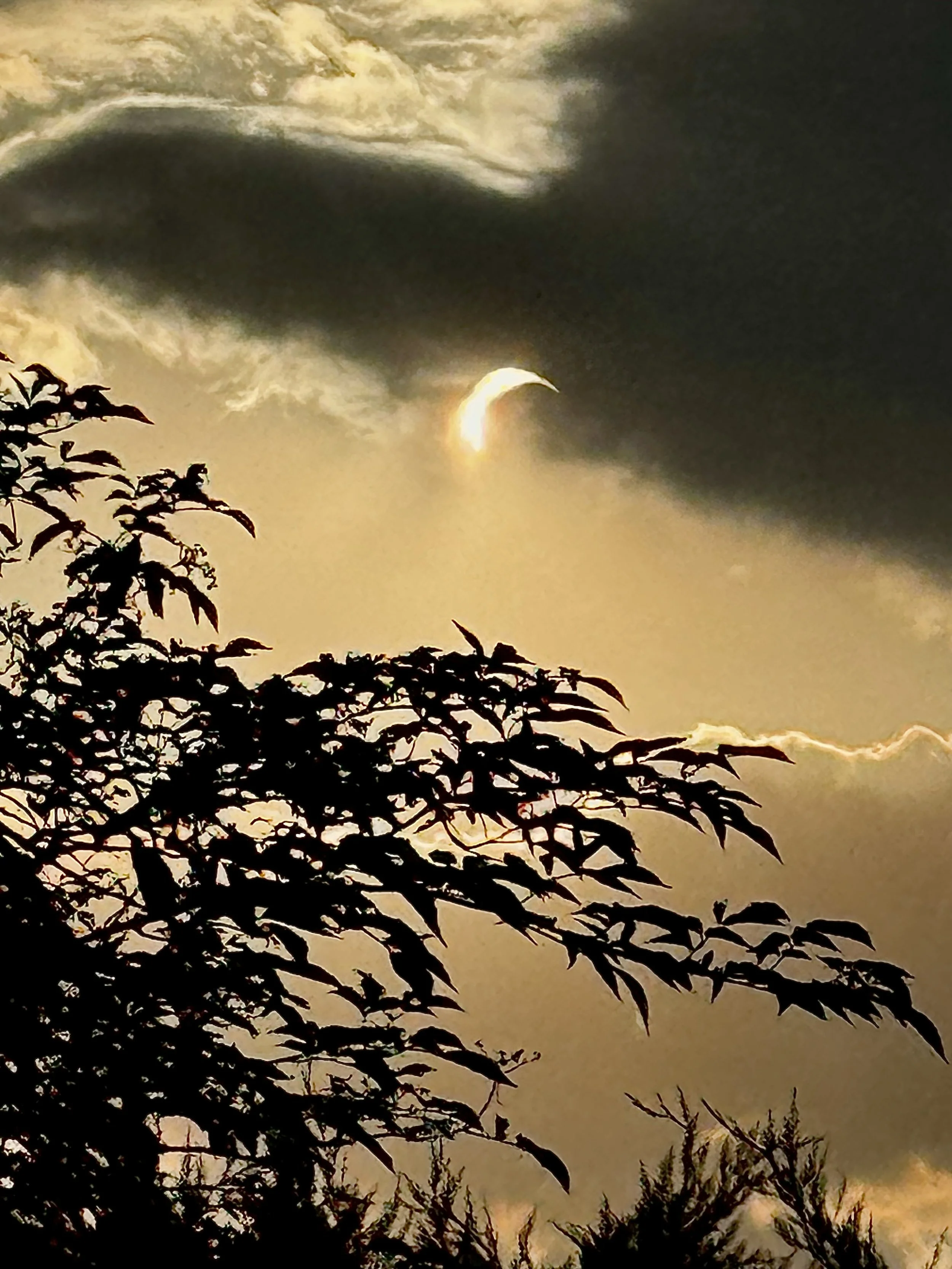
On the 12th of August the eclipse happened. Ninety-four per cent totality in my Stourbridge garden, a strange few minutes of altered light, the birds going quiet for a couple of minutes and then remembering to sing again. I was contemplating sending the drone up in the air to capture the event but settled with using its ND filters to try and get a decent shot with the iPhone instead. There’s always an opportunity to capture an image.
Three specific things, the sun and the moon and my very particular bit of England, had to be lined up in exactly the right position at exactly the right moment for the effect to happen at all. Which is not, when you think about it, very different from what a training arc for a specific event asks you to line up - me, my bike and a target.
Anyway. What I did not know standing in the garden with my head tilted back, trying to hold several things in order to capture the image, as the light did its peculiar thing, was that this would turn out to be the calm start of a properly eventful few weeks.
The Stourbridge Wildfire
Twenty-four hours after the eclipse, the fields on the other side of Racecourse Lane went up in flames.
For those who don't know Stourbridge, Racecourse Lane is a road that dissects open fields and the golf course at the edge of the town. It's a road I've cycled down more times than I can count, most recently on the Tuesday two days before, on my usual Stourbridge loop. On the Thursday afternoon it became a national news event. Smoke over the town. Homes evacuated, including several friends. Fields burning at the summer's driest moment, burning embers being transported on the wind, landing on tinder dry grass. Most of the area’s fire engines and fire fighters descending to battle the flames.
The fire came within four hundred metres of my door. Not quite close enough for me to be evacuated, but close enough that I quietly packed a grab bag with my laptop and every hard drive containing the Pompeii footage, and stood in the garden, smoke billowing and obscuring the blue summer sky. Later I moved the bag to the car so that if there was no time to think, it would still leave with me.
Friends of friends lost their homes. When I was at Beautiful Days the following week I met a group of Stourbridge locals and the conversation immediately turned to the event which had become simultaneously sobering in its proximity to everyone’s homes, yet also surreal in that it happened at all. The town had rallied together and briefly had become the focus of headline news reports as the beyond shocked and heartbroken homeowners recounted their experiences.
Driving back from Devon after the festival, I took a route home along Worcester Lane, on the other side of the railway cutting that had helped funnel and accelerate the fire. From that road you could clearly see the shells of houses that had been destroyed. Buildings that had, for as long as I have been riding my bike, been hidden behind a line of mature trees. The trees are no longer there. The whole familiar visual geography of a road I have ridden along for years had been rearranged in a few terrifying hours.
Nothing about this belongs in a blog about cycling training. Except that when the training happens in a place, and the place changes, the training and the place have a relationship worth noting.
The Training Continued Anyway
The plan, and the training that lives inside it, does not particularly care about eclipses or wildfires. I know by now that it cares about consistency. So the training continued.
On the 18th of August I did the second of the new phase's sweet spot sessions. The previous one, a week earlier, had been two ten-minute blocks at 200 watts, with a cadence I had failed to hit and a heart rate that had run slightly hot. This one was two twelve-minute blocks at the same power. Same intensity, twenty per cent more duration. Cadence corrected to the target of eighty-four revolutions per minute. Heart rate, at exactly the same wattage as the previous week, came in almost two beats per minute lower. Recovery between the blocks was cleaner, faster, deeper.
Small numbers on their own. Genuinely useful and encouraging when compared to a week before.
The Sunday morning weigh-in after the eclipse read 107.6 kilograms. Not the fastest downward move of the summer, but the underlying five-week trend continued to hold at just under a kilo a week in the right direction. It would definitely be more pleasing if the numbers were in a sharper descending pattern, but throughout the last 12 months I’ve learnt that it’s the trend that counts, and as long as the numbers are going in the right direction, I’ll get there eventually.
Anyway, none of this is exciting. All of it is what a well-managed middle-of-training-block period is meant to look like. Boring, invisible, cumulative work.
Beautiful Days
Which brings us to the hands-down best weekend of the year.
Beautiful Days has become a genuine annual institution, run by the Levellers in the grounds of a Devon stately home, with a specific vibe that is impossible to describe to anyone who has not been. Five days of camping, music, Darren and Matt’s breakfast cook-offs, Cosmic Dross, and seventeen thousand other people and their offspring all doing the same thing. Our little gang have have been going for the last ten years. It is my favourite bit of the summer calendar.
I have also, historically, treated it as a five-day exemption from anything resembling sensible living. You have to. Escot Park is a bubble … every year we camp in the same spot, the festival is set up the same way each year and, creatures of habit that we are, we tend to do the exact same things year. It begins with the traditional Thursday night ‘pub’ crawl from the Bimble to the Hope Tavern via the Copse Bar and Dirty Davey’s. The music begins, like clockwork, at 2pm on the Friday with the Leveller’s acoustic set in the Big Top and ends on Sunday night with the full main stage Leveller’s set via The Bar Steward Sons of Val Doonican Sunday Service at a very challenging 11am on the last day.
Thursday, the first big-party day, as noted, went as it always does although it was just me and Darren. Matt and Phil would be arriving the next day. Beers, a couple of cocktails, an excellent time, a slightly foggier Friday morning. But instead of that setting the pattern for the weekend, it did the opposite. From Friday onwards I was mostly on water, with a couple of beers per day instead of a stack of them, plus the occasional lemonade and an awesome chocolate brownie milkshake that turned out to be one of the great discoveries of the festival.
And here is the interesting bit. It was not hard. I was not sitting in a tent grimly resisting temptation while the others had all the fun. I was having a better time, with a clearer head, than I would have been guzzling cans just because everyone else was.
Amazingly it didn’t take any willpower. It’s become a habit that has quietly rewired itself over the summer, and it showed up at exactly the moment it needed to. Which was, on reflection, very much the point.
Bouncing to The Wonder Stuff
The other thing that happened at Beautiful Days is worth recording separately, because it is arguably the most surprising and welcome fitness result of the entire summer.
On Sunday night I danced. Specifically, an hour of full-on moshing to The Wonder Stuff, followed immediately by ninety minutes of dancing to the Levellers. Two and a half hours of continuous high-intensity intermittent aerobic exercise, in a field, at fifty-five, with a middle-aged smile on my face throughout.
Two years ago, twenty minutes of trying to keep up with the Ned’s Atomic Dustbin mosh pit at Stourbridge Town Hall seriously wrung me out. I needed to extract myself from that situation, rehydrate (with a pint), and mentally acknowledge my age. This year I had the aerobic capacity to bounce for two and a half hours and wake up on Monday feeling slightly stiff in the calves rather than deeply unwell.
This is not a small thing. This is a substantial, measurable, life-quality gain that Sa Batalla and Lincoln and the whole cycling project did not specifically train for but delivered anyway. The aerobic engine you build for a bike does not know it is only supposed to work on the bike. It just works.
The specific moment that resonated was during "Don't Let Me Down (Gently)," which anyone who was into The Wonder Stuff in the late eighties will remember as one of the great almost-anthems. During the verse that runs "it would be great to die together on the first day of the year, cos then we'd be quite legendary, could you volunteer," I noticed that two nineteen-year-olds had appeared in the crowd next to me. Word perfect. Bouncing along with the rest of us as though they had grown up on the album, which I assume they had, courtesy of parents making some commendable life-choices for their family.
The lyric on the page is not particularly cheerful. Mortality. Fading friendships. Being kicked to the floor. Miles Hunt’s specific gift as a songwriter is that he knows how to wrap the darkest words in the brightest possible music, so that a few thousand people singing "it would be great to die together" in unison in a field ended up being an act of celebration rather than a meditation on death. Especially at fifty-five, when the "life is finite" reading of the words is closer than it was at eighteen when I first heard the song.
A couple of generations in a field, singing the same song, with the same intensity. That is one of the many, many great things live music does. More pointedly, the nineteen-year-olds were bouncing around without phones in their hands. Old school. It was also, on any reasonable definition, a proper cardiovascular workout and I logged the festival as a training exercise. Who knew?!
A Cold, Then Norfolk
I got home from Beautiful Days on Monday. On Wednesday I got the inevitable post-festival lurgy: sneezing, gravelly throat, generally slightly less than optimal. On Thursday I was meant to be doing a sweet spot session in the morning. I did not do the sweet spot session. I did nothing at all. The AI coach, having explained the "above-the-neck / below-the-neck" rule to me some months earlier, gently confirmed that the correct move at the start of an illness is always to rest one full day and let the immune system get on with its job.
Friday I drove myself, Mum and Jake to Norfolk with the bike, for the last of the summer's family trips. Saturday morning, still slightly snuffly but otherwise fine, I did a two-hour ride around the flat Norfolk lanes. This is the specific gift of Norfolk to a Stourbridge-based cyclist: flat land. Endless, gently drifting, occasionally slightly uphill land, but essentially flat. Which means you can hold a sustained aerobic pace without hills constantly pushing your heart rate around.
The ride came out at fifteen miles per hour moving average, and a heart rate average of 133 beats per minute. That is the lowest heart rate average for any outdoor ride I have done all summer, and the pace was the fastest of them too. The engine I have been building for October showed up cleanly on the road, at genuinely modest effort.
The one comedy note. I built the Norfolk route in Strava without specifying paved surfaces only, so at twenty kilometres in my Garmin cheerfully tried to route me across a farmer's field. I made a judgement call and stayed on the tarmac. The Garmin then attempted to re-route me back to the same field via a different farm track twenty minutes later, at which point I realised I had been sold a dummy, and had to do a U-turn to find the actual road. Never trust a cycle computer to pick your route in a country it does not fully understand.
Where We Are Now
So here we are, at the end of August 2026, on the eve of what is now genuinely a clean September training window. Twenty-something days at home with only one small trip disrupting them, ending with an eight-day cycling working holiday in the Yorkshire Dales with Alan and Claire. Then Mallorca.
The eclipse metaphor from the top of this blog has, I hope, done some work by now. Three things had to align on the twelfth of August for the sky to change colour.
Three things now have to align in the first couple of weeks of October for the sky to look right on Sa Batalla. The training, the weight, the body's readiness. Layered on top of those, several more things that also have to be broadly right for the effect to happen at all: the weather that morning, the state of the kit, the sleep the night before, the fuelling on the day, the head between the ears.
Most days those things are almost in position but not quite. Every so often, if the work has been done and the luck is running, they line up. And then something interesting happens.
I am not promising myself anything about Sa Batalla. What I can say, and what August has quietly confirmed, is that the elements of the plan are visibly moving into position. The engine is getting stronger. The weight is coming down. The head is calm. The body did two and a half hours of continuous exercise in a field and asked for more. On a flat road in Norfolk, at a comfortable heart rate, I held a properly respectable pace over a proper distance.
Which is not a guarantee of anything. But it is, on any reasonable reading of the data, a body that is closer to alignment than it has been for a long time.
Next
The next Drop Bar Diaries will cover September, the Yorkshire Dales week, the flight to Palma, and either Sa Batalla or, more accurately, the whole ten days of what happens when a cycling holiday with old friends coincides with the peak of a nine-month training arc. Whatever happens will either be worth writing about or, in the tradition of the best endurance sport stories, will be worth writing about anyway.
See you on the climb.
A Birthday Trip, an Honest Weigh-in, and an Old Friend on a Hill
A Drop Bar Diaries dispatch from the middle of a summer, in which the bike gets ridden a lot, the bathroom scales get looked in the eye, and the archive gives up a couple of secrets.
Coming back from Lincoln, I'd assumed I might take a fortnight off the bike to recover properly. That lasted about four days.
Post-Lincoln, and the Return to the Rhythm
The plan had been, quite sensibly, proper rest. Lincoln had been a real effort, the body was, in the AI coach's phrase, "in an absorption block," and the correct move was to spend a full two weeks either on the sofa or, briefly, on a flight to Copenhagen followed by a train across to Malmo, followed by a couple of days filming Savatage in preparation for a much larger show we would be shooting with them in Pompeii a few weeks later.
The Malmo trip was, in retrospect, a proper piece of preparation. A chance to meet the band, get a first look at how they perform, and start thinking through how the eventual Pompeii show, which we knew would involve a 27-piece orchestra, would need to be shot. But all that, plus the not inconsiderable prospect of filming two nights of Marillion shows in the same legendary amphitheatre the two nights before, was for a slightly nervous filmmaker to worry about later. Right there and then, it was carrying kit, catching trains, and gently marvelling at Scandinavia's flatness.
I got home, sat on the sofa for approximately eleven minutes, and then began to feel the familiar itch of legs that wanted to go round. So I did a 45-minute Zwift spin, sat sub-140 heart rate throughout, and quietly started building again.
June turned out to be a proper training month. Not by the measured, five-hour-Saturday-ride, three-tempo-sessions-a-week definition of a training month. By the different and I think more honest definition that says: through work trips, gig weekends, festival crowds, and the general chaos of a life in and around music video production, the bike kept getting ridden. Some indoors, some out. Some short, some long. Some with company, some solo. The training that fits around a life is the training that gets done, and the training that gets done is the training that produces results. Allegedly.
Cornwall, Portsmouth, and Wolf Alice at the Eden Project
Mid-June disappeared into a trip to Portsmouth for a small band festival, then on to the Eden Project for Wolf Alice on the Tuesday night. Four days largely on my feet, forty-seven thousand steps across the visit, plenty of standing around, no cycling. The old me would have felt guilty about the days off. The new me had learned that a week of high step count and low bike miles is not lost training. It's the aerobic system getting a different kind of input, and it doesn't have to be replaced with anything.
Wolf Alice at the Eden Project was amazing - a magical arena producing a unique show, a visibly open stage which allowed those there early enough (including me) to take in the soundcheck ... two shows for the price of one. The price of the show included access to the site, so an exploration of the biomes and the walk back up the hill to the car park at the end of the night was more cardiovascularly demanding than most Sunday morning warm-up spins. By the time I got to the hotel, I had essentially done a Z2 session by other means.
Matt's Birthday Cycling Carry On
Three days after getting home from Cornwall I was back on the bike for what turned out to be one of the summer's big adventures. Matt Atkinson turned sixty, and the plan was to mark this in the traditional cyclist's manner: three consecutive days of long-ish rides with a group of friends, in some proper countryside, culminating each evening in a pub.
Sixty miles a day was the plan. What we actually did was 167 miles across the three days, with 2,835 metres of climbing woven through them. Day one took us from Stourbridge down to Ross-on-Wye through the Wye Valley, where the Premier Inn restaurant turned out to be closed and boarded up, and the only realistic option for dinner was a pub that required a half-mile walk down what turned out to be a pedestrian-unfriendly dual carriageway. Nobody had researched this in advance. We arrived at the pub slightly discombobulated, with the general feeling of a group of middle-aged men who had briefly, and inconveniently, discovered they were quite mortal. We caught the bus back.
Day two took us on to a small Cotswold town whose name Matt, in the earlier stages of the trip planning, had muddled. Was it Chipping Norton, or Chipping Campden? Even getting on our bikes at the start of day three we were not entirely sure. What we did know is that the version Matt had booked put us further out from Stourbridge than the version we thought we had booked, which extended day three by an extra amount of bonus miles. This is the sort of detail one only truly appreciates when the legs already have a hundred and thirty miles in them.
Day three brought us home from Chipping Somewhere, a proper long ride and the sort of finish that reminds you why cyclists go to pubs at the end of long rides. A victorious pint in Hagley's King Arthur rounded the trip, and celebrations, off nicely.
For me the whole trip turned out to be exactly the base-building block the AI coach would have prescribed if it had been designing a session to sit in the June rebuild slot. Consistent pace. Sensible effort. Long enough days to force the aerobic system to work, short enough not to require an entire recovery week afterwards. The kind of block that doesn't produce dramatic fitness gains on day one but shows up as slightly more comfortable riding a week later. The pub each night was proper. The company was proper. The Wye Valley and the Cotswolds, as we already knew from previous weekends away, are excellent riding country.
And I discovered, for the first time in a long time, the joy of a small bike bag strapped under the saddle for a light-touring three-day trip. Enough clothes for three days, plenty of snacks, spare tubes, no anxiety about breakdowns because I could just get to a pub and figure it out. I have been thinking about longer multi-day tours ever since.
A Second Wolf Alice, This Time in Front of Rather More People
Then, on the 5th of July, it was the big Wolf Alice show of the summer. Their Finsbury Park headline. This is a band I first saw eleven years ago in a room somewhere in the Midlands, with fewer than a thousand other people, when they were still mostly a rumour. That night at Finsbury Park they played to 45,000 people in their own backyard in North London. It was the sort of gig that only happens once for the first time in a band's arc, and probably only once in your relationship with a band. They killed it. A truly amazing and life-affirming performance. White Horses carry me.
So, another day on my feet, in the sun. Another day of proper standing-around watching a stage. Another day of the aerobic system getting a different kind of input than the AI coach would normally programme. It was, again, correctly placed in the calendar. Where we were in the training block, a day of gently loaded walking with excellent music was exactly what the body wanted, whether or not the coach would have written it that way. I drove home and stayed up until the early hours to watch England beat Mexico in the Azteca. What a day.
A Reunion With the Forty-One-Year-Old Me
Somewhere in the middle of July, I did something I had been intending to do for a while, which was to hand over my entire Strava archive to the AI. Fifteen years of rides. Nearly two thousand activities. Every Mallorca trip since 2018. Every Sa Batalla effort I have ever recorded.
The data was interesting. What was more interesting was what happened next, which was that the AI dug up my forty-one-year-old self. In August 2012 I rode a twenty-one mile route out of Stourbridge with a heart rate monitor on. Moving average 18.2 miles per hour. Average heart rate 171 beats per minute. Ascent 389 metres. That's my personal record for that route. I was 41 years old.
In July 2026, at 55, I rode the same route in cool morning air with the heart rate monitor on. Moving average 14.7 mph, average heart rate 156 bpm. Slower, obviously, and at meaningfully lower heart rate.
The AI, doing the arithmetic that AIs do, adjusted for the fourteen years of age difference, the eleven degree temperature difference between the two rides, the difference in effort intent (2012 was attacking, 2026 was controlled tempo), and the difference in body mass. The conclusion, delivered with the appropriate quantity of hedging, was that the aerobic engine underneath the 55-year-old me is essentially the same size as the aerobic engine underneath the 41-year-old me. What has changed is the mass of the body it's being asked to move. The engine is intact. The body has unfortunately expanded around it.
This was quietly one of the most useful things I've learned about my own physiology in years. It changed the story from "I have declined and need to accept it" to "the engine is fine, the body needs to shed some timber, and the improvement available is enormous."
A Cautious look at the Scales
Which brings us, unavoidably, to the bathroom scales
I want to be honest about the dread. For years I've been telling myself, and by extension anyone who asked, that I weigh "about a hundred kilos." This was based on approximately nothing. The last time I looked at a scale was … I couldn't tell you when. My mental picture of what I looked like in the mirror was, to be generous, a little out of date. A hundred was a round number that sounded plausible and required no further investigation.
The scale said 110.7.
That's nine to ten kilos more than I'd been believing. It is also, if we're going to be honest about the medical framing, technically inside the classification of obesity. Class 1, but obesity nonetheless. Which is a word I had not been comfortably applying to myself and, standing on the bathroom floor at 08:15 on a Sunday morning, was suddenly having to consider. Scary, sobering stuff.
The AI coach's response was, as ever, kind but honest. Sympathetic where sympathy was warranted, straight-forward where straight-forwardness was warranted, and immediately practical about what it all meant. Which was: the training was doing what training does, the aerobic engine was where the aerobic engine needed to be, but the body being moved by that engine was heavier than we'd been planning for. Weight loss just moved from "a helpful side project" to "the single biggest variable available."
By the following Sunday I was 108.8. The Sunday after that, 106.9. Three weeks after the confession, 3.8 kilos of a body that has been the wrong shape for a while had begun moving in the right direction.
Some of it is water, some of it is genuine composition change, all of it counts. The number now gets logged every Sunday morning, and I no longer flinch at seeing it. Well, I kind of do, but it's become not quite so scary.
The alcohol side of the equation quietly sorted itself out too. Eight consecutive days completely dry became easier, not harder, as they went on. There was a wedding weekend inserted where the wine and margaritas flowed for one evening, and then the streak resumed. The habit had rewired itself.
Pompeii
And then, late July, came the trip that had been the largest and most complicated project of my professional filmmaking career.
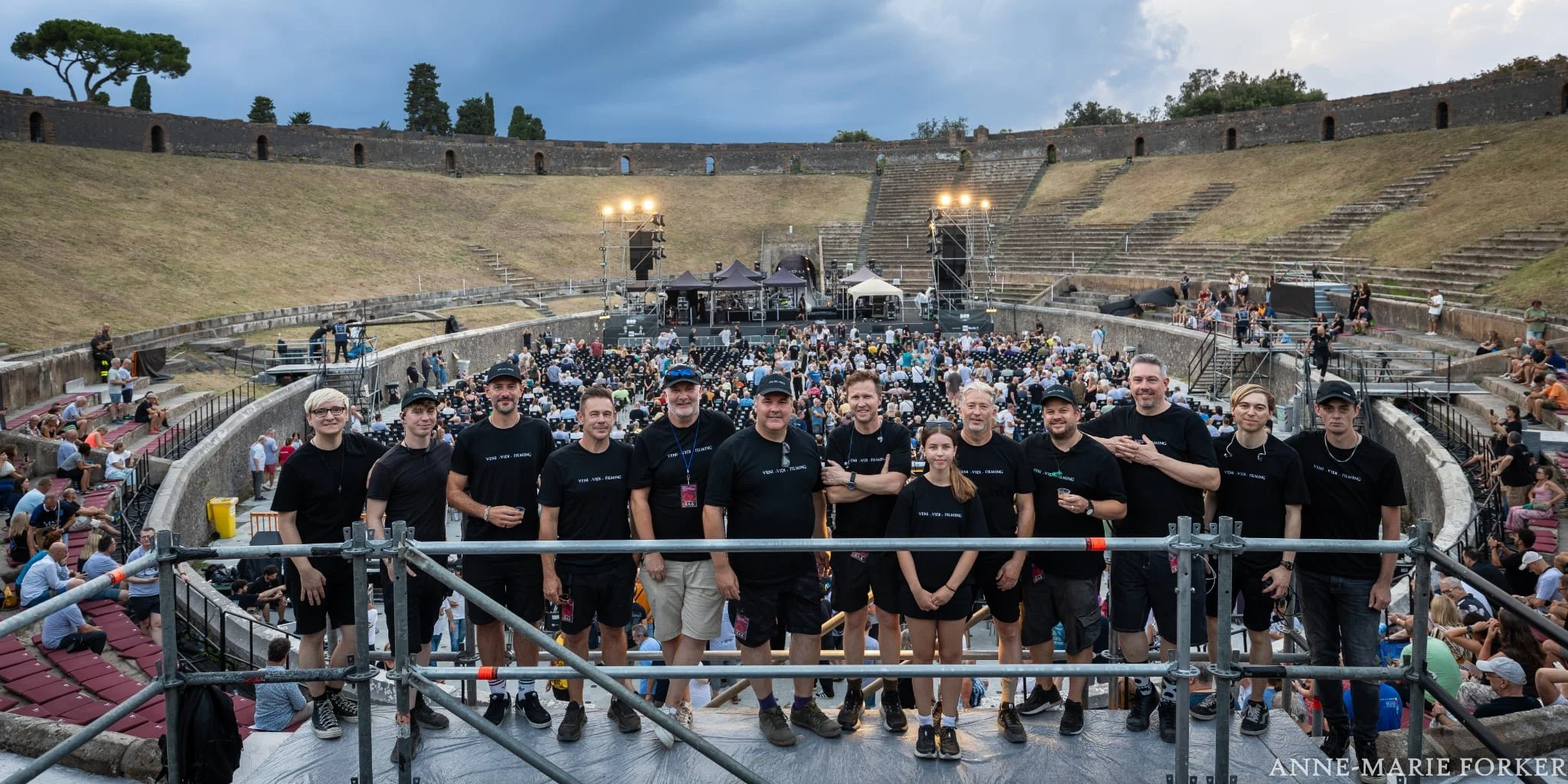
Pompeii's ancient amphitheatre. Three consecutive nights. Two of Marillion, one of Savatage with the 27-piece orchestra we'd been quietly preparing for since the Malmo trip. Months of planning. An unusual quantity of logistical and administrative headaches. An amazing crew who I still cannot say enough about. And a venue which is at once ancient, iconic, and brutally unforgiving of anything less than serious preparation.
The heat was serious. The humidity and the rain on the second night was a different level entirely, frazzled a couple of cameras and, by extension, taught us that the venue demanded much more respect than the mountains of respect we already had for it. Our lodgings were three kilometres from the amphitheatre, which doesn't sound like much until you realise it involves an exorbitantly-priced taxi ride each way and precludes the possibility of nipping back to the hotel for a quick shower between the day's setup and the night's show.
Character building, in the phrase everyone uses to describe experiences they would not particularly want to repeat and would also absolutely do again.
At the end of the third night as I retrieved a camera from the ancient slopes of the venue and as the crew was starting the long process of loading out, I took five minutes to stand alone in the empty amphitheatre and simply breathe it in. There is a specific weight to being alone in a venue that has been standing for two thousand years, knowing that you have just spent three days doing work you're proud of inside it. Whenever I see that place again on television, in photographs, in anyone else's footage, I know I will be able to see a small part of my soul there, embedded in the stones. It's a venue with which I now share some kind of bond that I don't have with any other place I've ever worked in, even the Royal Albert Hall, where the relationship is more one of extreme pride and familiarity. With Pompeii it is one of a sense of having joined in a silent gladiatorial battle and surviving, slightly scathed, but intact and in awe of the experience.
Then I went to find the crew for a couple of well deserved beers and a day later I was home.
For roughly a week afterwards I felt thirsty in a way that plain water (or the post gig beer) wasn't fixing, which turns out to be what happens when the sodium reserves run out and the body cannot hold on to fluids without them. The coach prescribed electrolyte tablets in the morning water for a week. It worked. The lesson filed away is that heat trips need electrolytes, not just water. Something the professional athletes know that filmmakers do not tend to think about.
Back from Pompeii it was back to the bike and three tempo sessions on Zwift, all executed to specification, and the surprisingly satisfying discovery that a 30-minute block at 175 watts held together comfortably by early August in a way it hadn't in mid-July. The drift rate per minute at that power had halved in three weeks. The engine was quietly adapting.
An Old Friend on a Hill
By the first Thursday of August, the fitness was clearly changing shape but I hadn't tested it on a proper climb in a while. The tempo work had gone well. The Sunday morning weight was moving. The engine was, in theory, in genuinely good working order.
So I went and rode the Clent Hills loop.
For those who don't live in the Midlands, this is my local climbing route. St Kenelm's Pass, Farley Lane (locally known as the "Romsley Water Tower Killer" by devotees of Strava), a couple of smaller climbs, all threaded into a 22-mile loop around the Clent Hills. In the mid 2010s I briefly lived in a cottage in the lower slopes of St Kenelm's Pass and this route was my regular training loop. I could probably ride it with my eyes closed. I hadn't ridden it in over two years.
The AI coach's instruction had been to ride it as base miles, not effort miles. Heart rate under 155 on average. Comfortable. Nothing to prove. What actually happened was that I rode it at what felt like a controlled, comfortable effort, and posted times on all the segments that were within a minute or so of my 2012 personal records. My heart rate held at 170-something bpm for extended climbing sections, and I felt, throughout, like I could easily do another 30 minutes if asked.
The AI's calm delivery of the data afterwards was the moment the year clicked into focus. Same route as 2012, essentially matching the heart rate profile of my peak-form self at 41, thirteen kilos heavier, in cooler conditions, finishing with genuine gas in the tank. The engine wasn't just fine. It was very close to being as strong as it had ever been.
The kilos are now the constraint. Everything else is essentially the version of me who was riding that loop when I lived in the cottage.
The AI Coach, Still Unnamed
A brief aside, because a couple of readers of the Lincoln blog asked. The AI coach still doesn't have a name. We've never quite settled on a gender either. It continues to answer to "the coach" or occasionally "buddy" and appears entirely comfortable with the arrangement. If anyone wants to suggest something better than either of those, I'm open to offers. I'm using Claude, but that name is a little too obvious
The other thing worth noting is that the arrangement has quietly become useful in ways I hadn't expected at the start. It's no longer just a training plan generator. It is, at this point, something more like an evidence base: a place to send data, get honest interpretation, be told when I'm talking rubbish, and occasionally be reminded that the direction of travel is genuinely good even when I can't see it in the day-to-day. Whether that role would be filled equally well by a human coach is a real question.
What I can say is that it's being filled well right now, by this one, and I have no plans to change the arrangement before October.
Where We Are Now
It's early August. Becki's wedding has come and gone (proper celebration, some 'controlled' drinking, some lovely company). Beautiful Days Festival at the end of the month will take five days off the bike, forced deload of a familiar kind. Norfolk with family in the last week of August will include the bike. September, unusually for me, is essentially free through to the 26th, at which point I head north to spend eight days riding in the Yorkshire Dales with Alan and Claire.
Mallorca is fast approaching at the start of October. Ten days on the island, plenty of familiar roads to explore, and yes, the opportunity to see what twelve months of AI-guided training has actually produced. Sa Batalla will be one of those days, obviously. The 2022 personal record of 39 minutes is not entirely out of the question if the weight continues to move and the September sharpening block does its job. But there are other rides too, and other reasons to be there. Mallorca isn't a race event. It's an annual cycling trip with some very good friends that happens to include a very specific climb I want to know I can ride well again.
I'm not promising myself anything. What I am feeling however is that the summer has done its work. The engine is intact. The head is calm. The body is starting to catch up. There is an ice cream, a recovery beer or two, and probably a couple of Mallorcan club sandwiches waiting somewhere on the island. And, if things continue to go well, a Repsol garage at the top of a hill in Mallorca I haven't properly ridden well since 2022. I'll still ask Sue and Anne to have the jelly babies ready just in case.
Next
The next Drop Bar Diaries will cover the runway from here to Mallorca. Beautiful Days, Norfolk, September, the Yorkshire Dales week with Alan and Claire, and eventually the flight to Palma.
See you on the climb.
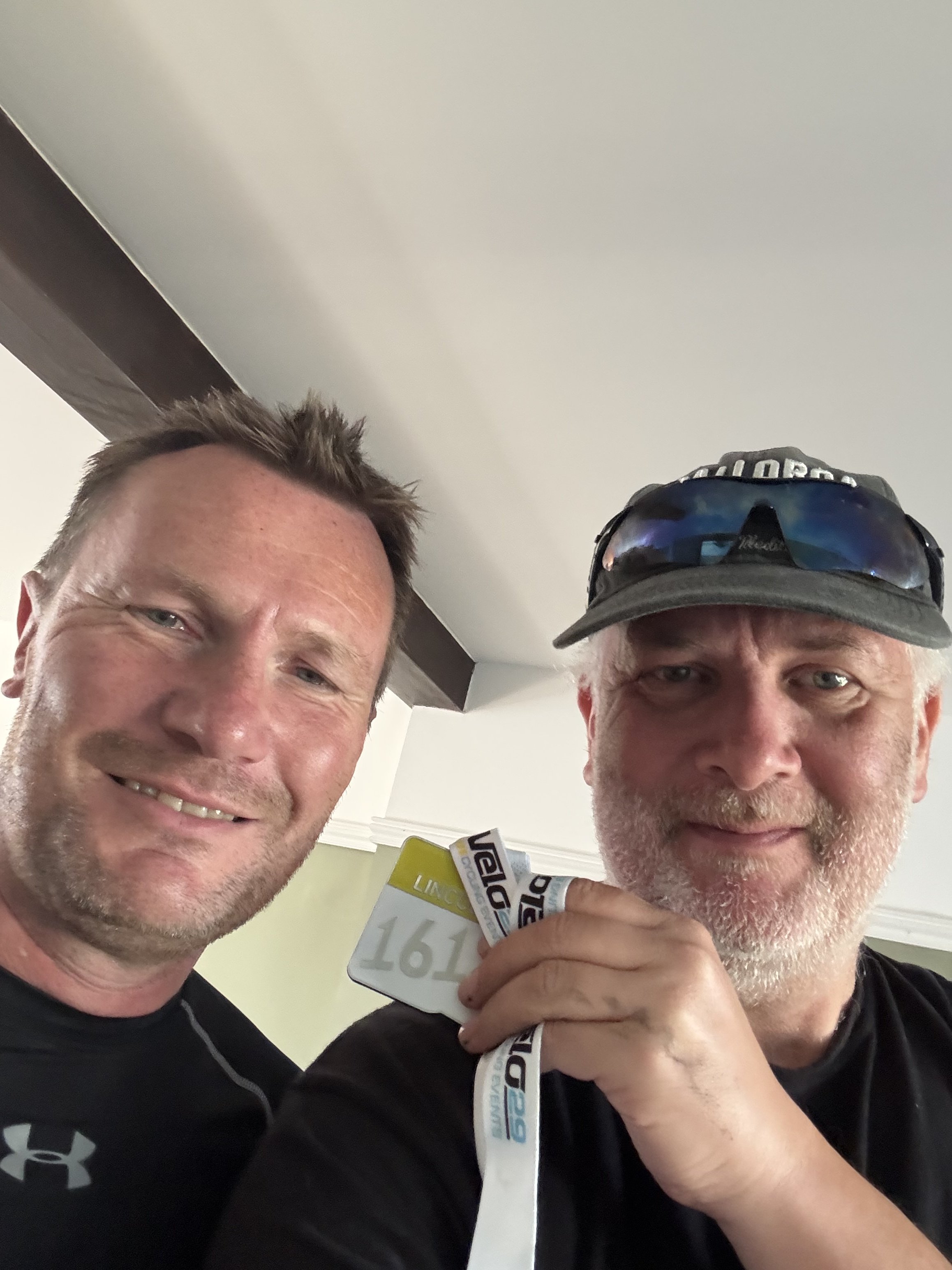
Yorkshire Gravy, Lincolnshire Flat, and Eight Per Cent More Than Advertised
Eight months of AI-coached cycling training. In May, on a Saturday morning at the York Auction Centre, we found out whether it had worked.
Yorkshire pub gravy that held the shape of the spoon. A livestock auction ring at half past six. A young starter discharging his duties with the importance of a court official. A flight to Copenhagen booked for the day after. Thirty-two degrees where twenty-two had been forecast. My mate Alan's back auditioning for a starring role somewhere around the halfway mark.
Also: a heart rate that did something quietly extraordinary across seven hours in the sun. And a sausage sandwich waiting at the end.
New Drop Bar Diaries dispatch. Grab a cup of tea, click the link, and settle in.
A Drop Bar Diaries dispatch in which the bike, the legs, the head, the gravy, and eight months of AI coaching all turn up on the day.
As you may know as the regular reader you are, about eight months ago, after a stretch of complacency about my riding fitness that culminated in a comprehensive bonk on Sa Batalla in Mallorca, I sat down with AI and told it to sort me out. I had also announced I was aiming to ride a hundred miles in May. The AI, to its credit, did not flinch. It asked me a series of sensible questions, did a sensible amount of arithmetic, and then quietly started ruining all my favourite excuses.
This is the story of what happened on the day.
Friday: Pies, Gravy, and a Lesson in Pub Beverage Specificity
I drove up to York on the Friday afternoon and got to the Airbnb a little ahead of Alan. The owner, Emma, met me at the door and, in the way that conversations sometimes do, we quickly found common ground. Emma is a physiotherapist and a sports masseuse, and had just got back from working on an organised cycling tour in Italy. So I'd booked an Airbnb the night before the biggest ride of my year so far, and ended up checking in with someone who spends her working life with cyclists. The cycling world is, as ever, smaller than it has any right to be.
Once Alan had arrived and we had unpacked the cars, we wandered out for dinner. Steak and ale pie, both of us, with the thickest Yorkshire gravy I have ever encountered. You know, the sort of gravy that holds the shape of the spoon for a second after you lift it. Definitely, most definitely not jus (Doonicans reference). Magnificent. We allowed ourselves one pint each, and then, with the discipline of two men who have learnt the hard way that ride-day hangovers are no longer survivable, we ordered what we believed was an orange juice and lemonade.
It turned out to be an orange squash and lemonade. Which is not the same drink. It is, in fact, two different drinks in the same glass, the second of which has been thoroughly defeated by the first. We drank it anyway, because the alternative was complaining in a pub in Yorkshire, which is poor form. And potentially dangerous.
Back at the Airbnb, we went through the Lincoln 161 checklist I had printed out. Kit laid out. Bottles in the fridge. A pep talk about ignoring each other's chimps. Alarms set. In bed by half past ten. Textbook pre-race behaviour from a pair of men who have, between them, attended quite a few pubs.
Saturday Morning: Bargain Hunt, Reimagined
The start was at the York Auction Centre, which I had imagined, perhaps optimistically, as a sort of Bargain Hunt set. I pictured polished wood, walls lined with antique display cabinets, maybe Christine Trevanion appraising a piece of art deco. The reality was a livestock auction yard. A vast tarmac apron, ringed with pens, with a route to the toilets that took you straight through the bidding ring itself. Standing in the ring at a quarter to seven on a Saturday morning, in cycling kit, where many a heifer has earned its keep, was a fitting opening to a day that was about to test a lot of things.
The starter was a young chap. The son, by all appearances, of one of the Velo 29 organisers, who had clearly been handed the task as a Saturday morning treat and was discharging the responsibility with the importance of a court official. No microphone, no loud hailer, just his shrill prepubescent voice. Every group rolled up. He counted them down, three, two, one, off you go. With every group, this routine.
Except us. By the time Alan and I were on the line, the novelty had worn off entirely. He glanced at us, shrugged, and said "go." We did not, because we were expecting the full countdown that everyone before us had been treated to. There was a moment of mutual confusion, after which we good-naturedly asked for the proper send-off. He sighed, gave us a deeply unenthusiastic three-two-one, and we rolled out into the morning at exactly half past seven, briefly the most underwhelmed two riders in Yorkshire.
The First Half: Faster Than Planned, Calmer Than Expected
The plan, lovingly built by my AI coach (side note … we never did give him or her a name) over the previous fortnight, was four segments of roughly 25 miles each, joined by feed stations, with heart rate targets for each segment and a fuelling timeline measured in actual kilometres. Why we decided to mix miles and kilometres up I don't know. The opening segment was to be ridden at 130 to 140 beats per minute. The mantra, which I had been told to repeat to myself whenever I felt tempted to chase, was "patience, young padawan, the day is long."
The day was indeed long. The chimp, ever reliable, spent the first half hour telling me we were going too slowly. The legs, on the other hand, felt absolutely fine, and the bike was rolling at just under 17 miles per hour with very little effort going through it. Lincolnshire and East Yorkshire, it turns out, really are as flat as advertised. What feels like a climb is a one per cent drag. What looks like a descent is the same drag in reverse. There is nothing for gravity to bite into. For a 110kg cyclist, this is an unfamiliar and slightly suspicious form of paradise.
Alan and I worked steadily into a very gentle headwind, taking turns at the front, settling into the kind of rhythm that long rides reward. We rolled into the first feed station at 26 miles in roughly an hour and forty, which was bang on the plan. Bottles refilled, a banana eaten, a polite queue for the toilets, a slightly longer stop than the five minutes I had optimistically planned. Back on the road. Shortly after, we latched onto the back of a small group of riders going at exactly the pace we wanted, and tucked in for a couple of miles of slightly faster, slightly easier wheel-following, which is one of the great gifts a sportive can give you when the wind is in your face.
The Middle: A Friend with a Back
Somewhere between mile 30 and mile 50, Alan's back started to complain. By the time we reached the turnaround at mile 52, the most important feed stop of the day in my pre-ride planning, his back had become a niggling concern. Twenty-four minutes of stop, much of it spent stretching, which was longer than the AI would have liked but exactly what Alan needed and I was more than willing to let him have.
We rolled out of the turnaround and into the second half with the wind now nudging us home and a slightly amended set of priorities. The rotation at the front was less important now. The stops to let Alan get his back into shape were. Every ten or fifteen miles, we'd stop, he'd unfold himself off the bike, do a couple of minutes of bending and twisting, and then we'd carry on. Not what we had planned. But you do not abandon a plan because of a complication. You modify it.
The most useful thing about training for a ride like this with someone you have ridden with for years is that the unspoken conversation works. We did not need to discuss the change of approach. We just rode it. I ate when I was supposed to. I drank when I was supposed to. The bike's thermometer was now showing 28 degrees and climbing, which was not what the forecast had told me to expect, but the body was handling it. The fuelling, for once in my life, was going right. The ghost of Sa Batalla was slowly fading.
The Home Stretch: A Quietly Triggered Afterburner
In the final twenty miles we caught up with a husband and wife team riding at almost exactly our pace. The four of us settled into a small rolling convoy, them at the front, the two of us hanging off the back. Not exactly wheel sucking, but riding at a respectful distance. Alan was nursing the back and, as it turned out later, an ankle that had decided to chip in as well. It was the kind of comfortable, communal rhythm that you find at the end of long rides, where nobody is racing anybody and everyone is just trying to get home.
Until the last couple of miles.
I do not remember exactly who suggested it, or whether anyone suggested it at all. Alan and I, by some unspoken signal that I think we both gave at the same time, decided we were going to finish strongly. The afterburners, as we have decided in retrospect to hyperbolically call them, were ignited. We pulled out, went past the husband and wife with what I hope was a friendly nod rather than a smug grin, and rode the last bit of road harder than we had ridden anything all day. We were not racing them. We were just doing the cyclist's equivalent of stretching our legs at the end of a long flight. It felt very good.
Six hours and forty-one minutes of moving time, seven hours and fifty-six minutes elapsed, and 108 miles on the GPS for what had been advertised as a 100-mile ride. The Lincoln 161, in the small print, turned out to be the Lincoln 175. I cannot pretend I was surprised. The route gives, and the route also takes a small additional fee. We also got lost a couple of times having missed the signposting whilst chatting. These detours in themselves didn't add that much to the overall total, and were more embarrassing annoyances than any additional, unnecessary exertion.
The Numbers Behind the Numbers
For the data-curious among you, the headline statistics tell a story that broadly matches what the day felt like. Average heart rate of 144 while moving. A maximum of 168, which I think was a little section up and over a relatively steep road bridge. And by "relatively steep" I mean a 3% gradient. The raised heart rate I suspect was probably more to do with the excitement and novelty of a change in the parcours. Three quarters of the moving time spent in low Z3, the comfortable rhythm I've now learnt I can hold for hours. Almost no time in the red. The peak temperature reading from the bike's thermometer was 32 degrees, against a forecast top of 22, which is the sort of cheerful inaccuracy you come to expect from British weather apps.
But the number I'm particularly encouraged by is this one. The average heart rate for the first half of the ride was 144.8 beats per minute. The average heart rate for the second half was 142.8. Across nearly seven hours of riding, in conditions ten degrees hotter than I had been planning for, my heart rate at the same effort actually went down. Cardiac drift, I've learnt, is the metric that tells you whether your aerobic engine is durable. Mine had drifted the wrong way, which in this case is the right way. The legs were in fairly decent shape at the end, which is exactly what you want, and exactly what eight months of patient base building is supposed to deliver.
I rolled across the line, collected a medal, sat down in the shade with Alan and a sausage sandwich, and downed what the organisers obviously thought was the most suitable recovery drink, a non-alcoholic Erdinger wheat beer. My more conventional protein shake followed in the car on the way back to Alan and Claire's house, nestled in the glorious Yorkshire Dales.
A Lasagne, a Drive, a Plane, and Some Reflections
Claire had prepared an amazing lasagne the size and density of a small piece of moorland. I ate, drank tea, fell asleep as soon as my head hit the pillow, woke up in the night with my legs muttering vague complaints, slept again, woke up surprisingly well, drove three and a half hours home the next day, and was on a plane to Copenhagen the day after for two days of filming in Malmo. None of which I had factored into the recovery plan, because the recovery plan was, frankly, a luxury for someone whose calendar that week looked less like a normal life.
In a strange way, the rest of that week became its own enforced taper out of the event. No riding. Lots of walking and carrying cameras. Long hours in airports and behind the wheel. By the time I got home and laced my cycling shoes back up four days later, the legs felt absolutely fresh. The body had simply got on with the work of repairing itself while I was looking at the inside of a Boeing.
So, Did the AI Coaching Actually Work?
Yes. Quietly, undramatically, and without ever doing anything particularly clever. It worked.
For eight months I have been coached by AI. First by ChatGPT, then by Claude. I have fed it ride data, told it what I had to eat, complained about my heart rate strap, sent it endless CSV files converted from Strava FIT files. It has, in return, sent me back into the garage when I would rather have been somewhere else, told me to rest when I would rather have been training, and told me to train when I would rather have been resting. It has, more than anything, taught me to be patient.
The fitness for an event like Lincoln is not built in the final fortnight. It is built in the five months before, in the dull middle stretch where nothing dramatic is happening and nothing dramatic is supposed to happen. The AI coach's gift was that it understood this and kept saying so, even when I did not want to hear it. It also understood, when life served up a week filming at Real World, a lads' weekend in Berlin, and the small matter of helping my son move into a flat up three flights of stairs with no lift in 34-degree heat five days before the event, that the right response was not panic but adjustment. The plan does not exist to be served. The plan exists to serve you.
The one thing the AI coaching cannot do, and never will, is the bit where you actually have to put the kit on and turn up. That part remains stubbornly, reassuringly human. But everything around it, the structure, the patience, the maths, the small reassurances at the right moments, all of that worked. The proof is six hours and forty-one minutes of riding, a negative cardiac drift, and a finish line approached with petrol still in the tank.
The funny thing, though, is that the structure, the gentle encouragement, and the sense that yes, I was getting fitter, made it easier to haul myself off the sofa and enjoy getting back on the bike again. It restored the habit, and that, combined with my growing strength in the saddle, made me feel like the old me, who sees himself as a capable cyclist rather than a stereotypical MAMIL with no right to even think about riding 175km.
I will write more about all of this when there is more to compare. For now, an experiment that began as a curiosity has, a few blogs and one sportive later, become something more like a working relationship.
Next?
The bike is in the garage. The legs are nearly back. The quite-nice-actually Erdinger is, alas, all gone.
The next objective is already in the diary. October, in Mallorca, where Sa Batalla is waiting for me with the patience of something that has been there for longer than I have been alive. The 2022 personal record of 39 minutes is, as you may recall, still on the books. I am not promising anything. But the AI coach and I are about to start work on the climbing engine, on the diet, and on the slightly delicate art of asking a 55-year-old, 110kg endurance rider to find a few more watts per kilogram between now and the autumn.
Whether we get anywhere near it or not, you'll hear about it here.
See you on the climb!
Eight years of Mallorca, and the Lincoln run in
An Anathema, a Head Cold, and Eight Years of Mallorca
A Drop Bar Diaries dispatch that begins in Port Alcudia with a broken bike and a head cold, and ends, several weeks later, on the eve of my biggest ride of the year.
Despite best intentions, and taking a little bit of bike-bag packing tuition from Richard, my invaluable local mobile bike mechanic and fixer of my myriad attempts to destroy my bikes and subsequent botched attempts to repair them, I arrived in Port d’Alcudia to the prospect of not cycling at all.
Unduly pleased with myself that I had avoided the disaster of a bent rear mech cage after the last time I flew back from the island (a very expensive mistake I was not planning on repeating) by taking the whole derailleur off the frame before packing it, I optimistically put it back on thinking I would be riding in no time.
But that was before I remembered that my name is Tim, and I am an anathema to smooth and easy mechanical procedures.
After reconnecting the derailleur to its hanger, the first thing I noticed was that the di2 cable had loosened and fed itself from the tube. I could not persuade it back in. I reconnected it to the derailleur and, yes, the gears still worked.
The bike clamped into a stand, I started to turn the pedals hoping that the smooth shifts Richard had fine-tuned for me would still be there. They were not. The chain slipped cogs, clicking and clacking away as my head started to write stories of a disastrous trip to my favourite cycling destination.
I should add, due to the combination of a Frank Turner gig the night before and a ridiculously early alarm call for the flight, that I had had three hours' sleep and was definitely not in the right state of mind to be confronted with unexpected mechanical puzzles.
So I did the only thing I thought was right. I tried to fix it.
A few minutes later, after fiddling with the tiny limiter screws and other bits that looked like they could be adjusted, I had, inevitably, made things worse. Honestly, it is like my brain gets taken over by that idiotic monkey who persuades me that if I just twiddle this, faff with that, then the problem at hand will miraculously be solved. It so obviously wasn't.
So I left it, unpacked, and took stock. Three hours later I woke up, having fallen asleep on the very comfy bed, just in time for dinner in the hotel. Which was a stroke of luck, because I had not eaten since waiting for my gate to be called at the airport some twelve hours earlier.
The next morning, sat in the sun outside a bicycle repair shop while the very helpful local mechanic sorted out my mess, I decided that this was, in fact, a very Drop Bar Diaries way to start a Mallorca trip. The island has, over eleven visits since 2018, taught me a lot of things. One of them is that everything will probably be fine if you let the right person fix it, and order another coffee.
Eight Years In
Eleven visits. I almost cannot believe that number when I write it down. Mallorca should, by now, feel routine. A place I have done. A box ticked, more than once. It does not feel like that at all.
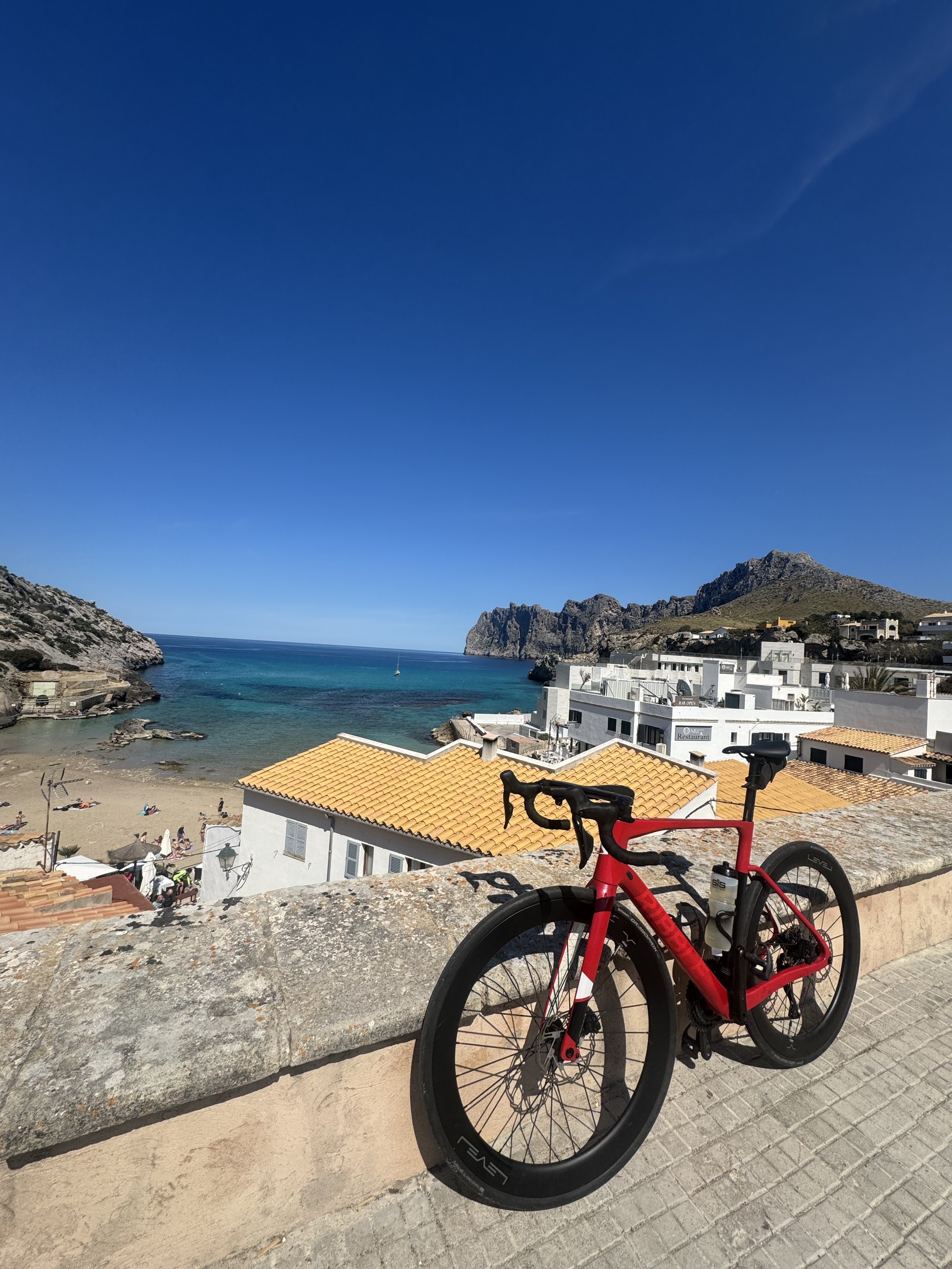
The roads here are now as familiar to me as the lanes around home. I know the climbs, the cafés, the wind directions, the stretches that always look easier than they are. I know where the switchbacks are, where the road surface lulls you into bad gear choices, where the promise of a beer and a club sandwich by the beach helps you make it all the way back into town. And yet, every visit, the island still does this thing where it surprises me. Around a corner I have ridden a hundred times, the light changes. The sea looks different. Some quirk of the day makes the same road feel new again.
I think the reason is that you do not really visit Mallorca, you renegotiate it. Every trip is a new conversation with the same place. You bring a different version of yourself each time. Different fitness, different head, different company, different problems, different reasons. The roads do not change, but you do, and so the relationship updates.
This was my eleventh updating. And the version of Tim who showed up this time was carrying a head cold I could not quite shake, an extra few kilos that the indoor winter had not entirely cleared, and a quiet sense of building toward something later in the year. It was also, mercifully, a version who had finally cracked fuelling, which is saying something for a man who last time out needed a jelly baby airlift up Sa Batalla.
The Week, With Its Unwelcome Companion
The week was, by any sensible measure, a great riding holiday. Glorious weather. Roads I love. A working schedule (yes, it was a working holiday) that left afternoons free for proper riding. Five rides over six days, with one rest day toward the end that wouldn't have been a rest day if it wasn't for the snotty nose and heavy head.
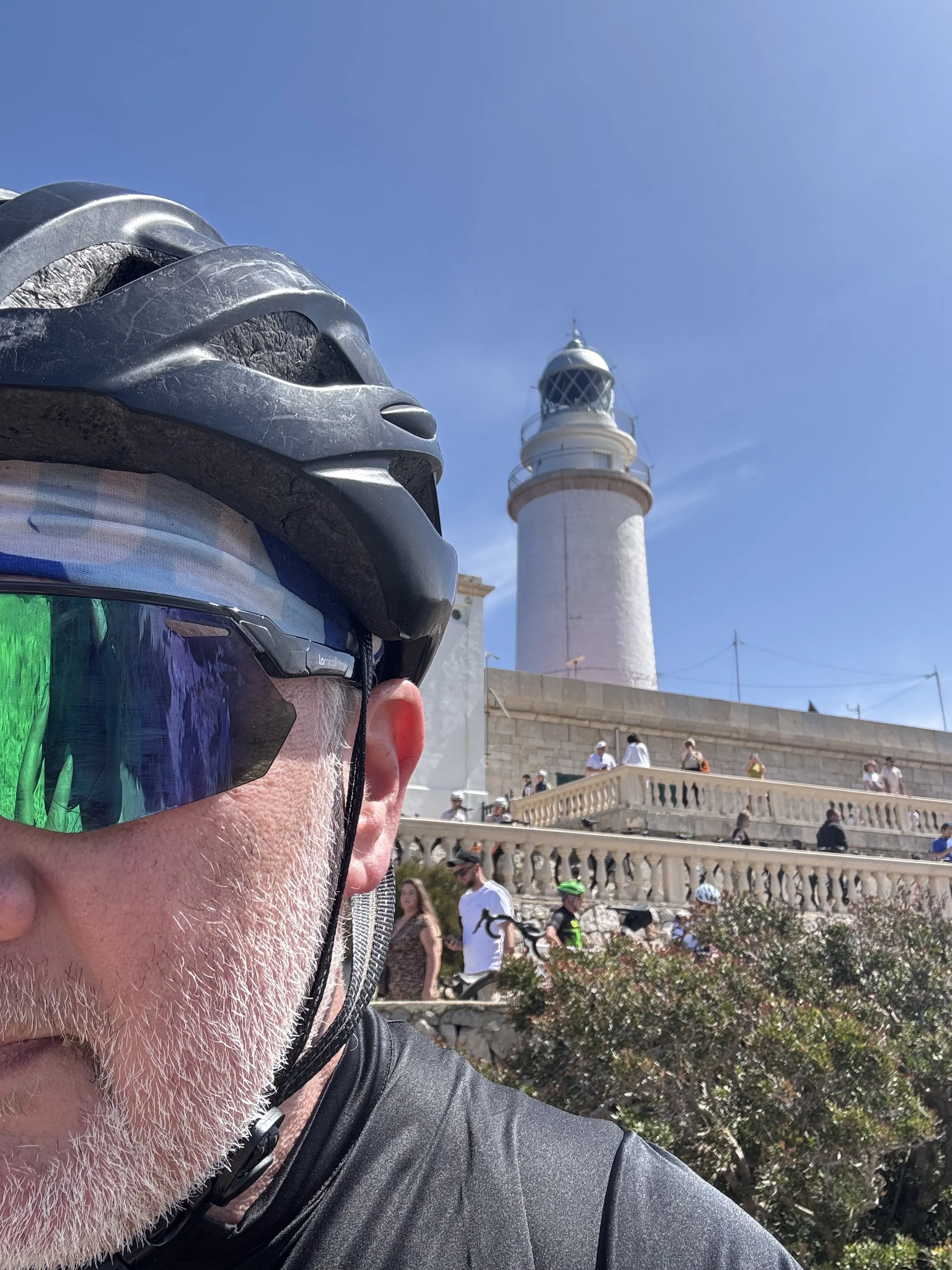
The head cold was the holiday companion who refused to take a hint. Not bad enough to take me off the bike, just bad enough to be present. A scratchy throat in the morning, a slight head heaviness in the afternoon. The kind of low-key passenger who reminds you they are there every time you stand up too quickly. I kept expecting it to disappear by the Wednesday. It was still hanging around on the Thursday when I flew home. By the lighthouse ride on the last full day, with the temperature reading 30 degrees plus on the climb up to Cap Formentor and the cold still doing its quiet thing, I was riding more on accumulated weeks of training than on whatever the day itself wanted to give.
But the riding was amazing. The Friday afternoon "legs and bike reliability" check (which, mercifully, the local mechanic had restored to actual reliability) was a 30-mile loop in the cooler late-afternoon air, just enough to remember how the bike feels under me on real road. Saturday was the big one, 74 miles including Sa Batalla and the long way home, finishing close to seven hours later in a haze of heat and sticky energy gel residue. Sunday was a flat 30 to the 1919 café for lunch in Port de Pollenca, the morning after the ride before, where I was genuinely surprised to find my legs felt better than they had any right to. Monday afternoon was a sharp little 20-mile out and back to take in the climb up to the Mirador at the top of Coll De Sa Creueta, fitted in around work. Then the cold won the argument, the rest day arrived without my consent, and Wednesday became the lighthouse.
Five rides, 193 miles, fourteen hours of moving time. A proper week for me at this stage of things.
Sa Batalla, an Honest Update
Sa Batalla is the climb I always come back to. Not because it is the hardest, or the most beautiful (it kinda is), or the most photographed, but because I have a relationship with it. I have a benchmark on it. A 2022 personal record of 39 minutes that I have not since matched. That's not particularly fast if you compare me to the top of the Strava segment standings, but it's pretty damn impressive for me.
I did not match it this year either. Closer to 50 minutes by the time I crested at the Repsol garage, more if you include the short rest stop just before the final steep switchbacks. And I want to be honest about that, because as you know by now, the Drop Bar Diaries does not really do the "everything is amazing" version of cycling.
What is actually true is this. I am, at around 100kg, a heavy cyclist. And it’s a harsh truth that every additional kilo of human costs you on a 5% gradient in a way that the indoor world genuinely cannot replicate. The garage is a magnificent simulator of effort, but it is not a simulator of gravity. Indoors, you can build the engine. Outdoors, on a real climb, your engine has to drag everything else with it.
So Sa Batalla in 2026 was not slower because the winter training failed. It was slower because the rider on the climb was a different one. With a head cold, in 30 degree heat, hitting the climb around 75km into the ride. The 2022 version of me was lighter, fresher, lockdown-fit, and probably had no business being that fast.
The truth I have made my peace with is that I am unlikely to beat that PR without a serious focus on weight, and the upcoming Lincoln sportive with Alan does not particularly care about Sa Batalla. Lincoln cares about durability, and durability is something I do have. Sa Batalla is a side quest now. A friend I revisit each year, not a benchmark I am trying to humiliate.
Watopia versus Worcestershire
Coming home was strange in the way it always is. The roads I left for Mallorca were grey and reluctant. The roads I came back to were green and willing. Spring had decided to show up while I was away. I rode 40 miles with my Chawn Wheeler mates on Saturday and a punchy 18 miles solo on Sunday, and it felt like cycling had quietly become enjoyable again.
And there is one small comedy in all of this.
After two solid weeks of outdoor riding in two countries, my AI coach has been very politely sending me back into the garage. For Z2 work specifically, the garage is just better. My local roads are too lumpy and undulating to hold a steady aerobic pace. There are too many rises that lure me into Z3, too many descents that drop me into Z1. To do an actual disciplined Z2 anchor session, I have to leave Worcestershire and head into Watopia. It is the most absurd geographic inversion I can think of. The real roads are too unpredictable, the imaginary ones are too consistent. Both are useful, for different things, and I have given up trying to make them mean the same thing.
A New Coach, Quietly
Worth flagging for those of you who have been keeping track. Partway through this build, I changed AI coaches mid-stream. ChatGPT has been brilliant, and a lot of the structure I am still riding is its work. But I wanted to see what a different model would do with the same data, the same goal, and the same slightly chaotic life.
I will write more about that another time, when there is more to compare properly. For now, the new coach has turned out to be fluent in the same restraint that the previous one taught me, which is reassuring. We are still pointing the bike toward Lincoln, and the plan still adapts when life gets in the way. So far, so similar. So far, so good.
Back Home, Back to Work
Coming home from Mallorca, the maths looked faintly uncomfortable. Five weeks until Lincoln, and a calendar that resembled a game of Tetris played by someone actively trying to lose.
My chimp, predictably, wanted to panic. It looked at the days ticking down and started its familiar lobbying. Cram the miles in. Do more. Do it harder. You are running out of time, Tim.
But here is the thing I have slowly, grudgingly learned over the last six months. The fitness for an event like Lincoln is not built in the final five weeks. It is built in the five months before them. By the time you are counting down the days, the engine either exists or it does not, and the job is no longer construction. It is maintenance, sharpening, and above all, not being an idiot.
So the run-in was almost boringly sensible. A long ride at the weekend. A quality session or two in the week, indoors on Zwift where I can actually hold the zones. Easy spins in between. Rest days that I no longer feel guilty about, which is possibly the single biggest change in me as a cyclist this whole year. The numbers, for what it is worth, kept quietly improving. The same efforts at a lower heart rate. The same wattage feeling a little less like a confrontation and a little more like a conversation.
The Real World Intervenes
And then work did what work does, which is arrive all at once.
I spent a week filming Marillion at Real World Studios. Four days, nine hours apiece, of moving cameras, capturing performances, chasing interviews, and the particular flavour of exhaustion that comes from concentrating very hard for a very long time. I drove home on the last night running on the sort of sleep debt that makes motorway signs start to feel halucinary.
Not a single pedal stroke all week.
The old me would have been quietly horrified. A whole week off the bike, this close to the event. The new me, coached into a calmer place, recognised it for what it was: an enforced deload. A rest week I had not planned but probably needed, arriving at more or less the right moment in the build.
And the proof came the following Saturday. I got back on the bike expecting heavy, reluctant legs, and instead found them springy and keen. The week away had not cost me fitness. It had let me absorb it. The body, it turns out, does its best work when you finally stop bothering it.
The Dress Rehearsal
Then came the big one. The last proper long ride before Lincoln. Four hours, sixty miles, 100km, alone.
The brief from my coach was specific. Ride it like a rehearsal. Find the flattest route I could, which around here is a bit like asking for the driest patch of the sea. Pace it as though I had another two hours to do afterwards. Eat early and often. Wear exactly what I will wear on the day. Find out now if anything rubs, chafes or complains.
So I did. I picked a route that involved getting over some hills in order to reach the flatter roads, because that is simply the geography I live in. I kept the effort honest. I ate before I was hungry and drank before I was thirsty. The café I had earmarked for a mid-ride stop turned out to be closed, which a few months ago would have thrown me, and instead I just kept rolling and ate what I was carrying.
Four hours later I got home with tired legs but, crucially, with something still in the tank. No bonk. No crisis. No bargaining with gravity. Just a long, steady, slightly unglamorous ride that did exactly what it was supposed to do, which was prove that the engine is ready.
That ride was the moment the whole winter quietly justified itself.
The Coach Earns Its Keep
With the training essentially done, the focus shifted to the plan. And this is where having an AI coach stopped being a curiosity and started being genuinely, almost suspiciously useful.
I fed it the route file for the Lincoln 161 and asked what we were dealing with. What came back was, broadly, the most reassuring news of my cycling year.
Lincoln is flat. Properly, comically, gloriously flat.
There is an irony here that I am choosing to enjoy rather than overthink. The first half of this blog is a heavy rider making his uneasy peace with gravity. Sa Batalla, the climbs, the honest admission that a 100kg cyclist pays a tax on every hill that lighter riders simply do not. And then the event I have actually been training for, all these months, turns out to be a hundred miles of Lincolnshire and East Yorkshire. Terrain so flat it barely troubles the contour lines. No climbs worth the name. No gravity tax. Just long, open, steady roads, which happen to be exactly what a diesel-engined endurance rider is built for.
So, the route has been broken into four segments of roughly 25 miles each, neatly divided by the feed stations. Heart rate targets for each one (if I can find my HR monitor which has mysteriously disappeared since the dress rehearsal ride). A fuelling plan measured in actual kilometres rather than vague good intentions. A pacing strategy built around the single rule my chimp hates most, which is to start slower than you want to. There is even a checklist, a proper document, covering everything from what to eat for breakfast at an unsociable hour to the faintly humbling reminder to make sure that the bikes actually fit in the car.
It is, I will admit, a slightly strange thing to be coached by. But six months in, the proof is not in the novelty of it. It is in the fact that I am about to ride a hundred miles once more, at 55, feeling genuinely prepared rather than quietly terrified. That will do for me.
Two Hurdles Left
Which leaves only the small matter of the next ten days. Because the calendar, never one to make things simple, has saved two final obstacles for the run-in.
First, Berlin. A lads' weekend, involving what has been officially classified as a "very, very, very gentle cycle tour that ends with a beer." I am choosing to file this under tapering. My coach, to its credit, agrees, on the strict condition that the word "gentle" is honoured and the word "beer" is not pluralised too enthusiastically. Yeah, we’ll see how that goes.
Second, and more alarmingly, the bank holiday Monday before Lincoln I am helping Jake move into his first flat in Bristol. A flat which is, of course, up three flights of stairs and no lift. So roughly five days before riding a hundred miles, I will be performing an unscheduled and entirely unwanted strength workout consisting of furniture, boxes, and a large leather armchair Jake has excitedly procured from a local charity shop, none of which have been briefed on my training plan.
Will a weekend of Berlin and a day of furniture-hauling undo six months of careful work?
Almost certainly not. But it would be very much in keeping with this whole ridiculous, joyful project if the final test before the biggest ride of my year turned out to be a large bookshelf and a tight stairwell.
Lincoln is on the 30th of May. Alan, my partner in this whole enterprise and the man who cheerfully entered us both into it in the first place, has been quietly stacking up his own miles around the glorious Yorkshire Dales and is, by all reports, in fine fettle. We will roll out together, somewhere in a field near York at half past seven in the morning, and find out what a hundred miles of flat Lincolnshire has to say about six months of work.
The next blog will tell you whether the man, the plan, and the slightly weary legs made it round.
For now, the bike is ready. The plan is ready. And I am, give or take an armchair and a stairwell, ready too. Pivot!
See you on the other side.
Winter Miles, Wet Roads, and the BronchoStop Blues
It’s been a while. But I have an excuse. Honest. This is a Drop Bar Diaries entry about the bit nobody posts on Strava: when the weather is vile, your lungs go on strike, and you’re convinced your fitness is dissolving with every swig of cough syrup.
There’s a particular kind of bravery required for winter training, and it’s not the heroic kind you see in glossy cycling adverts.
It’s not soaring over Alpine passes with a sunlit grin. It’s not a cinematic slow-motion sprint with cheekbones, veins and orchestral music.
It’s standing by the window in the dark, watching rain arrive sideways, asking yourself the eternal question:
Is this dedication… or is this just poor decision-making?
Winter, in other words, is the season where cycling becomes less about romance and more about paperwork. Laundry. Layers. Negotiations. The kind of training where your biggest opponent is your own sofa, quietly whispering: “You’ve done enough. Look, there’s a blanket. Come and be warm.”
And still… this is, alledgedly, where the year gets built.
The Year Has Shape Now
This winter grind has been different because it’s had a point. Actual lines in the diary. Actual reasons to keep showing up.
Mallorca is booked: April 16th to 23rd. Port Alcúdia base. Work until mid-afternoon, then ride. A Saturday and Sunday in the middle for bigger days. The Tramuntana waiting like an old friend with a slightly judgemental eyebrow .. ‘You again? You’re back for more?’
And York to Lincoln is now properly real too: 161 kilometres at the end of May. Not 161 miles, which I believed for a brief period and have still not forgiven Alan for allowing me to believe. We’ve booked an Airbnb for the night before, which is the moment it stops being “an idea” and becomes “a thing you’ll have to do with your actual body.” Ouch.
So yes. The plan exists. The structure is working. Fitness was starting to return in that suspicious way it does when you stop trying to bury yourself every ride and instead train like a functional adult.
And then I went to Yorkshire.
Yorkshire: Ironically, where Plans Go to Die
In my head, Yorkshire was going to be crisp winter air, moody but rideable roads, and a couple of steady rides with Alan up in the Dales. Even if the weather was questionable, surely I could sneak out for a short hike, keep the legs ticking over, feel saintly.
What I got instead was weather so foul it didn’t even feel like weather. It felt like an organised attempt to remove joy from the atmosphere. But the Dales still looked beautiful as ever. How does that work?
No rides. No hikes. No wholesome “fresh air.” Just wind, rain, and that peculiar northern grey that makes you wonder if you’ve accidentally entered a black-and-white film.
And the irony is, I wasn’t even there purely for cycling.
I went to see Alan and Claire and to film a Wonky Tree Bookshop event - taking author Jon Lock and illustrator Nich Angell into schools to share their children’s graphic novel Tiny Hercules. It was brilliant. Kids properly engaged. Books landing. The kind of day that restores your faith in humans. We need those kinds of days these days, don’t we?
It was also, as it turns out, exactly where I picked up a chest infection.
So yes… I went to see the bloke I’m riding Lincoln with and came home feeling less fit than I was before I saw him.
There’s a metaphor in there somewhere, but I was too busy coughing my lungs into next week to find it.
The Part Nobody Logs
This is the part of winter cycling you don’t post.
No elevation graphs. No heroic captions. Just you on the sofa with a hot drink, wondering if you’ve swallowed a small hedgehog, and doing mental arithmetic with panic.
Because cycling doesn’t just live in your legs. It lives in your rhythm, your routine, and your sense of yourself as someone who still does the thing.
When that routine gets interrupted, your brain starts telling stories. Mine more so than perhaps the next ill cyclist, or am I paranoid?
Quiet stories. Convincing ones.
All that work? Gone. Every day off is a step backwards. Every cough is a loss of fitness. Every swig of BronchoStop is basically an exit interview with your aerobic system.
It’s absolute rubbish, obviously. But winter is when your brain is most vulnerable to rubbish. Less light, less movement, more time alone with your thoughts, and an alarming familiarity with cough medicine.
The Truth (Annoyingly)
Fitness doesn’t disappear overnight.
It doesn’t evaporate because you miss a week. It fades when you stop showing up for months, not because you got ill and took the sensible option - which, for once, I did.
And here’s the cruel irony: getting back too soon is often what keeps you ill longer.
So I stayed off the bike. Not because I lost motivation. Not because the plan failed. But because lungs are quite useful, and I’ve reached the age where I’m trying to treat my body less like a disposable machine and more like something I’d like to keep using.
The Return (Light Duties, No Drama)
Eventually the cough loosened. No tight chest. No scary breathlessness. Just the odd lingering reminder that my immune system had briefly been freelancing.
And when I finally got back on the bike - gently, sensibly, obediently - something really important happened:
Nothing went wrong.
The first ride back was a tiny, boring little re-introduction. Z1. Low Z2. No heroics. No testing. Just turning the pedals and confirming I still knew how.
Then another.
Then another.
And suddenly, without fanfare, I was back in it.
Not fully. Not instantly. But enough to remind me the engine hadn’t melted.
The Great Outdoor Test
The real proof came when I finally got outside again for the first time since October.
A group ride. Five of us. Fresh air. Real roads. Actual countryside. The kind of ride that makes you remember why you put yourself through winter training in the first place.
It wasn’t “pure Z2” because unless you live somewhere pancake-flat and ride alone with monk-like discipline, pure Z2 outdoors is mostly theoretical. There were kickers, long drags, and the inevitable group-ride surges.
But here’s the key thing:
I finished feeling energised.
Not shattered. Not collapsed on the sofa questioning my life choices. Just… good. Alive. Like a cyclist. I’d almost forgotten what that felt like.
That was the moment I knew the indoor work was transferring. The base was real. The winter wasn’t wasted. It was doing its job.
Mallorca: Now Close Enough to Smell
And now we’re into the real build again.
Z2 anchors that leave me feeling better than when I started. Tempo sessions that don’t require a lie down afterwards. A proper Sa Batalla simulator block at 185W that feels like work but not suffering. Low cadence “Mallorca legs” sessions that genuinely let me imagine climbing again instead of surviving climbs.
I’ve even got a cadence sensor now, which means I can no longer pretend I’m “probably at 85rpm” when I’m actually doing some panicked 96rpm spin that sends my HR into the stratosphere.
Everything is pointing in the right direction again. The momentum is back. The plan is alive.
And most importantly, the thing that has quietly become the real victory, I’m starting to look forward to sessions rather than dread them. I’m finishing rides feeling like I’ve gained energy, not spent it. The bike is becoming what it’s meant to be: a place where effort makes you feel better, not worse.
The Point of All This
Winter training isn’t about brilliance. It’s about continuity.
The year doesn’t get won in January. It gets built through January. February. March. The messy bits included.
Especially the messy bits.
So yes, Yorkshire derailed things. A chest infection tried to evict me from my own routine. The weather did its best to make cycling feel like an administrative burden.
And still… I’m here. Still turning up. Still building. Still heading toward the Tramuntana.
Mallorca is a few weeks away now.
And I intend to arrive with lungs that work, legs that remember, and a smug little sense that the BronchoStop era is over.
Running Away With The Circus…
A Drop Bar Diaries dispatch from the Royal Albert Hall, where I spend a few days filming physical perfection… then go home and towel my face at 180 watts.
January had barely started and it immediately did that thing where it grabs you by the collar and says, “Right then mate, let’s see what you’re made of.”
Which is a bold move, given what I’m made of is mostly Gu dessert, good intentions, and a man in his mid-fifties who is still slightly surprised when he wakes up and his knees feel… present.
The festive period, against all odds, didn’t scupper my fitness. The mince pies came. The Quality Street came. The red wine definitely came. And yet I emerged without that familiar post-Christmas sensation of being sealed inside my own body.
I put that down to two things: I didn’t treat December like a moral test, and I now have an AI coach who, as you know if you’re familiar with these ramblings, speaks fluent restraint and refuses to panic when real life happens.
Which is fortunate, because the opening weeks of 2026 didn’t just happen.
They arrived wearing insect costumes and safety harnesses.
The glamour, the grind, and the great human pretence
This month started with a proper circus run. Not metaphorically. Literally.
I was down in London working with Cirque du Soleil at the Royal Albert Hall for OVO. Red carpet premiere. Camera set-ups. Quick turnaround content. One of those jobs where you begin the day feeling professional and end it feeling like a slug that has learned to drive.
The pace was… brisk. The kind of brisk where your brain opens 37 tabs and none of them are helpful.
In the middle of it all, I somehow slotted in a weekend away with my oldest school friends. Cheltenham. Big Regency house. Nige’s birthday meal. Wine. Karaoke. Darts. A basement games den that felt like a parallel dimension where time doesn’t exist and “recovery” is treated as a quaint rumour.
It was brilliant.
It was also not what you’d call optimal athletic preparation.
Then it was straight back into the circus machine.
One day became sixteen hours. Quick turnaround editing, locked away in the Rausing Circle. After the show, after the final push, after that last little surge of adrenaline that convinces you you’re fine, I drove home on three hours’ sleep, which is always a thrilling experience if you enjoy hallucinating entire conversations with motorway signage.
By the time I got back, I felt like I’d been gently tumble dried.
And the thing is, that wasn’t even the most humbling part. The most humbling part was where I’d been tumble-dried.
Because while I’m there, at the Royal Albert Hall for heaven’s sake (pinch me), trying to look vaguely competent behind a camera and a portable edit suite after a weekend of friendship, karaoke and interesting Hotel Du Vin wall art, I’m surrounded by people who could warm up by doing things I’d need a signed waiver to attempt.
Why Cirque makes you feel like a weakly-designed human
Here’s the thing about working around Cirque performers: you spend the day filming people who look like they were built in a lab by scientists who got carried away.
They backflip because it’s Tuesday. They hang upside down like gravity is a suggestion. Their warm-up involves movements that most of us would reserve for a near-death experience.
You watch them and think: I’m also a cyclist. I, too, enjoy physical activity. Surely this shouldn’t be too hard to do?
Then you remember your most recent athletic achievement was standing up after an hour on Zwift without making a noise that would worry a cat. If I had a cat. Sometimes I’m glad I don’t, as my post-Zwift noises would have sent it straight out of the cat flap and into a witness protection programme.
Being around that level of physical perfection is humbling. Not unpleasant. Just… revealing.
They’re younger. Bendy. Athletic. Probably able to sleep eight hours without waking up to think about pensions, or needing a midnight toilet stop.
And weirdly, it didn’t make me feel defeated. It made me feel determined. Not to become them (I wish), but to become the version of me who can ride a long day and still enjoy the last hour. The version who doesn’t dread climbs. The one who finishes with a smile instead of negotiating with the laws of physics.
My AI coach assures me that version is available at 55. But it doesn’t come from hero sessions. It comes from doing the work in between all this chaos.
The training plan vs real life
The question I kept asking myself was simple: have I undone everything I built before Christmas?
And the answer, surprisingly, was no.
Fitness doesn’t evaporate because you have a late night and a long drive. It fades when you stop showing up completely. It disappears when you decide the plan only counts if conditions are perfect.
This year, my AI engineered plan is designed to survive imperfect weeks and adjust to my unpredictable diary.
So instead of trying to “make up” for travel and wine with something heroic, I did something deeply unglamorous. Something as far away from a red carpet premiere as possible. I simply got back on the bike and did the work I could do. Not the session I “should” do in an imaginary world where I sleep perfectly and never drive to London. The session that made sense for the body I had that day.
One tempo-lite session later, it was obvious: the engine is still there.
Heart rate, heat, and the great indoor swamp
If you read the last Drop Bar Diary you’ll know I’ve also added a new character to the story: a heart rate monitor. Which sounds like a sensible upgrade, but is in fact a portable anxiety generator that straps to your chest.
To recap, my first rides with it were a masterclass in over-attention. Watching the numbers rise, trying to lower them through breathing like I was defusing a bomb.
The reality is less dramatic and more useful. Turns out a big chunk of my ‘high heart rate’ indoors is heat., as my AI coach explained. (Side note: my AI coach probably needs a name.)
I’m a hot-running human. I would sweat in a fridge. I’ve dealt with hyperhidrosis my whole life. If there’s a world championship for “creating a puddle beneath your own bike,” I’m podium level.
And Zwift doesn’t give you a cooling wind. It gives you a screen, a Heads Up Display and a constant reminder that you’re still nowhere near the end of whatever interval you’re hoping will end. Soon.
So I’ve started taking cooling seriously. I moved the fan closer, aimed it at chest and neck, and suddenly it felt like a different sport. Less swamp. More control. I’m now flirting with the idea of a second fan for my face, partly for performance, partly because there are only so many times you can towel your eyes mid-interval without feeling like you’re running an amateur car wash.
The best bit is that heart rate, once you stop trying to win it, becomes genuinely useful. It tells you what you already feel: when you’re stable, when you’re drifting, and when heat is hijacking the effort. It doesn’t judge you. It just tells the truth.
Which is almost as annoying as my AI coach, who keeps asking if I’d like its recommendations for more optimal fan placement.
The circus trick I’m learning
If there’s one thing this early-January mayhem has reinforced, it’s this: the training isn’t the challenging part. The consistency is.
Anyone can do a big session when they’re fresh and motivated. The real trick is doing steady work when you’re busy, tired, mildly chaotic, and one email away from a breakdown.
That’s the trick I’m actually learning. Not just watts. Not just fitness. The ability to keep turning up.
Sometimes it’s Zone 2. Sometimes tempo. Sometimes “get on the bike, do something sensible, get off before you do anything daft.”
It’s boring. It’s also working.
Lincoln: the route is set
There’s now a real line on the horizon. The Lincoln sportive. End of May.
Alan and I had a brief moment of confusion where I thought it was 161 miles, which turned the whole thing into accidental ultra-endurance terror. But the good news is it’s actually 161 kilometres, which is still a proper ride, but no longer requires you to write your will.
So the objective is clear: build steadily, stay consistent, arrive in May feeling capable. Not flawless. Not superhuman. Just ready.
Berlin: the “taper” curveball
The weekend before Lincoln, I’m going to Berlin for a lads’ weekend.
Now, in most athletic programmes, the week before an event is called the taper. It’s where you reduce load, sharpen up, and arrive rested.
In my programme, it might be called: The Pre-Sportive Controlled Chaos Experiment.
We are planning a cycle tour around the city, which I would like to hereby officially classify as “training.” Not because it’s structured, but because it involves bikes, movement, and the possibility of mild suffering if Walters insists we “just pop over this bridge” for the tenth time, trying to relive his halcyon mountain-biking days.
Will it count? Yes. In the same way pork pie fuelling counts. Not scientifically, but spiritually.
Besides, if you can’t enjoy riding around Berlin in late May without worrying about your TSS, what are we even doing here?
Curtain call
So no, the busy start to the year hasn’t scuppered anything. If anything, it’s been the proof-of-concept test.
The plan didn’t collapse when work got heavy. It flexed. I still rode. I still banked the work. I still came out feeling like a cyclist, not a person who used to be one.
The route to Lincoln is set. The fans are multiplying. The sweat is… present. And while I’m in Berlin doing my “taper”, Cirque have a new show there too, which means I can potentially top off the weekend by watching even more bendy people doing impossible things with their bodies.
Either way, May is coming. The miles are quietly stacking. Winter is now just winter riding: steady sessions, sensible progressions, and a growing appreciation for the fact that discipline isn’t grim, it’s simply the habit of showing up.
See you on the road to Lincoln.
And if you spot me mid-ride wiping my face for the 400th time, just know this: I’m not struggling. I’m performing.
Mince Pies, Metrics and Monkeys … The Great Festive Negotiation
A Drop Bar Diaries Christmas-to-New-Year special in which I attempt to train like an adult, supervised by a small primate called Moogy Boogie.
Christmas is a fascinating time of year for a cyclist. Not because of the weather (usually damp, dark and engineered to erode your will to live), but because December turns training into an annual negotiation.
On one side: the version of you that wants momentum… steady work, consistency, a quiet sense of progress.
On the other: the version that sincerely believes a mince pie counts as carb loading and that Quality Street is recovery nutrition if you eat it soon enough after standing up.
Both versions live in me. And this year, they’ve got witnesses.
Moogy Boogie and the Red LED
Picture the scene. Zwift is glowing on the screen, the fan is doing its best, and I’m producing that uniquely indoor-cycling sweat, the kind that starts in your scalp and ends up in your socks.
On the bars, like a tiny director on a tiny set, sits Moogy Boogie. One of the PG Tips Monkey soft toys Jake and I started collecting when he was little. We ended up with a whole gang of them, named, each with their own cheeky character, ridiculous in the best way, and they’ve somehow become part of our family story.
Jake’s 29 in March and still keeps Bing Bong and Zugga Zugga with him in Bristol. Bing Bong even has his own Facebook page, which has been posting holiday snaps and nonsense updates for sixteen years. In our defence, this world needs more harmless daftness, not less.
This Christmas, Charlotte (Jake’s girlfriend, and now an enthusiastic recruit) gifted us two new monkeys released for Comic Relief in November: Cedric Chimpinson, apparently Bing Bong’s long-lost cousin, and Nigel Stevenson. Naturally.
So the gang grows. Which is fitting, because Christmas also brings back another character… the chimp in your head.
The Chimp in My Head
Professor Steve Peters’ Chimp Paradox has done the rounds in elite sport for years, and once you’ve met your own chimp you can’t unmeet it. The gist is simple: you’ve got a rational brain that can plan and pace, and you’ve also got a chimp that deals in feelings, urgency and self-preservation.
The important bit (the bit I didn’t fully appreciate until recently) is that the chimp doesn’t have just one voice. It’s not always the same character shouting the same instruction. It’s more like a shape-shifter with a little box of costumes.
Sometimes it’s mischievous. The Zwift chimp. The one that sees a segment, a rise, a passing rider and goes: “Go on then. Smash it. Prove yourself!”
That chimp is basically twelve years old and fuelled by ego.
But sometimes, and this is the one that’s much more convincing, it’s persuasive. It sounds sensible. Reasonable, even. It turns up mid-effort, looks at the time remaining, and starts making a calm case for why you should stop.
I’ve met that chimp many times, but more recently on one of the longer sweet spot sessions, when the second block suddenly felt like a different sport. The first interval was fine. The second started fine. And then, somewhere around the point where your brain realises there’s still a long way to go, the chimp slid into the passenger seat and began its presentation:
“You’re not feeling 100%. You’ve slept badly. You’re going to blow up. There’s no point. Just pack it in and try again tomorrow.”
That voice used to win. I’d either bail completely, or I’d do the other classic chimp move: surge at the end purely to prove I could, then crawl off the bike like I’d been evicted from my own legs.
This time I did something that felt almost suspiciously adult.
I didn’t quit. I didn’t fight. I didn’t turn it into a moral drama. I just dialled the watts down in ERG mode and finished the time. Not because I’d “given up”, but because I’d decided the actual goal was to bank the work and keep the habit intact, not to impress an imaginary jury of cyclists in my head.
It’s a small shift, but it’s the one that changes everything: listening to the chimp without obeying it.
And that’s why this festive period feels different. Because the main negotiation here is about resisting both chimp impulses: the one that wants to smash every ride, and the one that wants to bail the moment discomfort starts bargaining.
Which brings us neatly back to mince pies.
The Mince Pie Protocol
No, mince pies aren’t the enemy. The enemy is the thinking that arrives with them.
There’s the “it’s Christmas so training doesn’t count” approach, which tends to drift into “it’s Christmas so I’ll do absolutely nothing for two weeks.” Then there’s the “I must offset this” approach, which leads to people doing maximal intervals on four hours’ sleep purely out of guilt, then eating half a tin of chocolates while insisting they’ve earned it. I have been both these people.
This year has been more considered. Some days I train properly. Some days I spin easily. Some days I rest because, well, it’s Christmas Day and I’m cooking for eight and my mum’s kitchen resembles a military operation.
I keep the habit alive without turning it into a performance. Which turns out to be… surprisingly effective.
Heart Rate: The New Anxiety Generator
Christmas also brought me a heart rate monitor. A sensible person would clip it on, ride normally, and glance at the data afterwards like a calm adult.
I did not do that.
I spent parts of my first ride watching the number like a stock market ticker, trying to bring it down using breathing techniques and what I can only describe as mild spiritual negotiation.
The problem with heart rate is that it tells a story, but it also tells several unnecessary subplots. You slept badly. You’re warm. You’re dehydrated. You had a drink. You’re thinking about heart rate too much. It adds another, unwelcome psychological layer to an already demanding situation.
So my AI coach (who we now know speaks fluent restraint) and I have agreed that heart rate is currently observational. We collect it, we learn from it, and we don’t chase it like a dog after a tennis ball.
The Last Ride of 2025
New Year’s Eve arrived and, partly needing to decompress after a challenging twelve months, I decided to end the year quietly. No big party. A controlled session earlier in the day. No heroic “earn your indulgence” nonsense.
The ride itself was tidy: two twenty-minute blocks at 195W, steady as a metronome. The first block settled nicely; the second block ran hotter, as it should, and towards the end I lifted cadence slightly and saw my heart rate monitor’s LED go red.
I’d covered the heart rate number on the Zwift HUD so it wouldn’t distract me, but the LED sits there in my peripheral vision like a tiny traffic light for my nervous system, and red has a way of waking the chimp.
The old me might have panicked, surged, proved something. The new me stayed smooth and kept the power steady. I finished feeling like I could have done a third interval if I’d had fuel to hand, not because I was trying to impress anyone, but because I genuinely felt strong.
I ended 2025 buoyant, not battered. Which is not usually how I exit December.
New Year’s Day: Choosing the Sofa (… “the sofa, let me lie here on the sofa”)
January 1st arrived with a slightly fuzzy head (a few glasses of red, nothing heroic) and, confusingly, legs that felt ready. That “prepped” sensation that normally triggers the chimp’s favourite thought: we should ride to prove we’re still on track. I didn’t.
I visited mum, lazed in front of football, and let the training settle. Adaptation doesn’t happen while you’re heroically sweating. It turns out it happens afterwards, quietly, while you live your life.
As Lisa, an ex professional cyclist, concurred after reading my first blog: “rest, rest, rest!”
Rest looks like nothing, which is why the chimp mistrusts it. But rest is often the most productive thing you can do.
Pork Pie Endurance
A couple of days later I did the steady endurance anchor: sixty minutes at 160W, controlled and oddly easy, the kind of ride you could hold for ages, which is the entire point.
The only complication was that I’d had a pub lunch a couple of hours earlier: cheese and onion roll, pork pie, scotch egg, pint. Oops. Obviously not traditional cycling fuelling. More “British endurance folklore.”
Heart rate sat higher than it probably would on a clean day, which is fair enough when your digestive system is staging a small conference. But the interesting part was how stable everything stayed within the main block. Smooth power, minimal drift… the kind of steadiness that suggests the engine is getting more durable even when real life is interfering.
If nothing else, it’s comforting to know the plan can survive a scotch egg. And it was a delicious scotch egg, to be fair.
The New Context: Lincoln
And then my buddy Alan, in a move that I can only describe as “optimistic friendship”, entered us into the Lincoln sportive at the end of May.
Not the polite distance. Not the sensible option. The full 161 miles, out and back… with the comforting clause that we can turn at the 100-mile point and still claim a respectable century without needing therapy or replacement limbs.
So, that’s the new context. That’s why the festive negotiation matters. Not because I need perfection now, but because I need continuity. Winter isn’t about hero days. It’s about stacking ordinary days until spring arrives and you realise you’ve quietly built something.
Back to the Monkeys
The monkey gang has always been a reminder that the best things in life aren’t always the sensible ones. They’re a thread from Jake’s childhood that’s endured into his adulthood, a little pocket of shared ridiculousness that still makes us laugh.
Bing Bong and Zugga Zugga in Bristol. Moogy Boogie on film shoots and sat with me in the edit suite. Cedric and Nigel joining the story like long-lost relatives turning up at Christmas.
And in a strange way, they’re also a reminder of what this training approach is trying to do: keep the story going.
Not reinvent everything. Not punish yourself for enjoying life. Just keep turning up. Keep building. Keep it sustainable.
If Moogy Boogie can sit through a twelve-hour concert shoot day without losing morale, then I can survive January without declaring war on bread.
Happy New Year from The Drop Bar Diaries.
And remember: if you’re going to use Quality Street as recovery nutrition, at least do it within the anabolic window.
If you’re on Zwift, you’ll find me riding as Tim Sidwell — usually somewhere in Zone 2, riding off the mince pies.
I Hired an AI Cycling Coach…
Apparently, This Is What Midlife Optimisation Looks Like
There are various recognised responses to turning 55.
Some people take up yoga.
Some buy expensive watches.
Some carry on regardless, staring quietly into the abyss.
Sounds dramatic
I, on the other hand, have decided to outsource my cycling fitness to artificial intelligence.
Not because I was broken. Not because I’d hit rock bottom. But because, somewhere between Zwift races, Mallorca climbs, and the creeping suspicion that gravity was winning, I began to wonder whether my long-standing training philosophy of ride hard, hope for the best was perhaps no longer scientifically sound.
Also, if I’m being honest, there was a subliminal ambition humming away in the background: to feel again like the version of myself who, in 2013, rode from Le Havre to Paris to watch the Tour de France, rolling around the Champs-Élysées a few hours before the pros. Fit, motivated, and utterly convinced I’d cracked cycling forever.
Spoiler: I hadn’t.
The Problem With “Just Riding More”
I’ve loved my cycling for the best part of twenty years. Really, it began much earlier, specifically the moment my parents bought me a Raleigh Arena for Christmas. That bike carried me through childhood adventures and into my first job as a paper boy. Freedom on two wheels, paid for in newsprint, dirty hands and early mornings.
Somewhere between sixteen and thirty-five, I lost my way a little when it came to physical fitness. Life happened. Then, thanks to a really cheap and really heavy mountain bike, cycling found me again.
What followed were more adventures, this time shared with friends who, like me, were becoming increasingly aware of the passing of time and the quiet expansion of waistlines.
More recently, the bike has meant Mallorca trips, iconic climbs, long days with friends, and solo rides where it becomes a therapist with wheels.
But training-wise, I’d fallen into a familiar middle-aged groove.
Zwift races. Hard sessions. Chasing watts. Treating rest days like a moral failing.
I was still reasonably fit, but everything felt slightly… brittle. I could go hard, but not often. I could survive tough rides, but recovery took longer. And beneath it all lurked the uncomfortable thought that maybe this - slightly fading, slightly fatigued - was simply how it was going to be now.
Enter AI (Via a Petrol Station)
The idea of using AI crept in quietly rather than arriving as a grand plan.
I was in Mallorca in October and discovered, halfway up Sa Batalla, that enthusiasm had once again outpaced preparation. I ran out of legs, then energy, and finally excuses; a reminder that fitness, like optimism, needs supporting properly.
I was ultimately rescued by the last bite of Anne’s protein bar and a couple of Sue’s jelly babies, while Richard, who had been racing ahead of everyone in his unofficial role as trip photographer, dropped back and gently nursed me up to the infamous Repsol petrol station at the top of the climb.
No, I’m not sharing those photographs.
That evening, slightly humbled, I started asking ChatGPT some straightforward questions about nutrition. When I shared the next day’s route, it suggested a fuelling and hydration approach that was practical, specific, and, crucially, doable.
I followed it. The difference was noticeable.
Back home, the thought lingered. If it could help me think more clearly about what to eat and drink, could it also help me train a little more intelligently? I decided to find out.
Human, Assisted
I started feeding it ride data from Zwift and Strava. I explained what I’m working toward. In an almost daily dialogue I talk to it about time constraints, work, travel, sleep. Real life.
What comes back isn’t a rigid plan. It’s something far more unsettling.
Restraint.
Zone 2 rides. Tempo sessions that feel suspiciously manageable. Sweet Spot workouts that end with me standing up normally rather than crawling toward the fridge like a wounded animal.
It actively encourages rest days. Celebrates them, even. Calmly and persistently explains that adaptation happens when you recover, not when you bury yourself heroically for the fourth time in a week.
This is deeply inconvenient information because it runs completely counter to everything I’ve spent years believing about fitness. That progress comes from suffering. That if you’re not empty at the end of a ride, you haven’t done it properly. That backing off is weakness, and rest days are something you earn only after near-collapse.
AI, it turns out, has no interest in those narratives.
Conversation, Not Commands
The biggest change isn’t the sessions, it’s the interaction.
I’m not handed a plan and told to comply. I talk through how rides feel. I question stats. I admit when I’m tired, busy, or mildly resentful of Lycra. I explain late nights filming gigs, long drives, disrupted sleep.
And instead of the plan collapsing, it adapts.
Miss a day? Fine.
Feel flat? Back off.
Feeling strong? Hold steady — don’t get greedy.
For perhaps the first time, training feels adult.
Flexible, but not vague. Structured, but not punitive.
The Results
Let’s manage expectations. This is a work in progress.
I have not woken up looking like a mid-50s Geraint Thomas. I still possess a perfectly respectable layer of winter insulation.
And yet…
Zone 2 feels easier.
Tempo feels comfortable.
180 watts now feels like somewhere I arrive, rather than wrestle into submission.
Sweet Spot sessions leave me energised instead of wrecked. I’m finishing rides feeling revived — which, at 55, feels suspiciously like witchcraft.
Even my belt has noticed. Tentatively. We’re not making any promises yet.
Zwift, Reconsidered
Don’t get me wrong, I think it’s fantastic but I’ve always suspected Zwift was part of the problem. Too virtual. Too gamified. Too easy to turn every ride into a race against strangers called things like PainCave69.
But it turns out Zwift wasn’t the issue - I was.
By riding free rides properly - coasting downhill, easing off, riding terrain as I would outdoors - it’s become a genuinely effective training tool. Not a simulation of real cycling, but a controlled environment for practising restraint.
Which, frankly, has never been my strongest suit.
Why Coach AI Actually Feels Like It’s Working
AI isn’t magic. And it’s not replacing good human coaches any time soon. But what it does brilliantly is remove ego from the equation.
It doesn’t care that I once rode the Champs-Élysées.
It doesn’t flatter me.
It doesn’t panic when I miss a session.
It doesn’t get bored when I ask the same question three times in slightly different ways.
It just quietly nudges me back toward consistency.
And consistency, it turns out, is devastatingly effective.
The Long Game
This isn’t about chasing KOMs or reliving youthful glory. But there is, undeniably, a ghost riding alongside me … the 2013 version of myself who felt light, strong, and utterly in love with cycling.
I don’t need to be him again. But if I can meet him halfway - fitter, wiser, less obsessed with suffering - I’ll happily take that deal.
The immediate goal is simple enough: a couple of spring sportives with my mate Alan, threading our way through the Yorkshire Dales. Long miles. Honest climbs. Steady effort. Good company. The kind of rides where you’re not racing anyone, but you still want to feel capable … strong enough to enjoy the day, and sensible enough to finish it with something left in the tank.
Which brings us neatly to Christmas.
Late nights. Big meals. Social obligations. The festive period’s well-worn promise to loosen routines and soften resolve.
Will discipline survive mince pies and red wine?
Will AI intervene?
Will January be a calm continuation or the traditional, slightly sheepish “reset”?
That, I suspect, is where this experiment starts to get properly interesting.
Merry Christmas — and welcome to The Drop Bar Diaries.
Next time: festive excess vs artificial intelligence. Place your bets.
If you’re on Zwift, you’ll find me riding as Tim Sidwell — usually somewhere in Zone 2, practising restraint.